What We Learned About Flood Risk Perception After Hurricane Helene

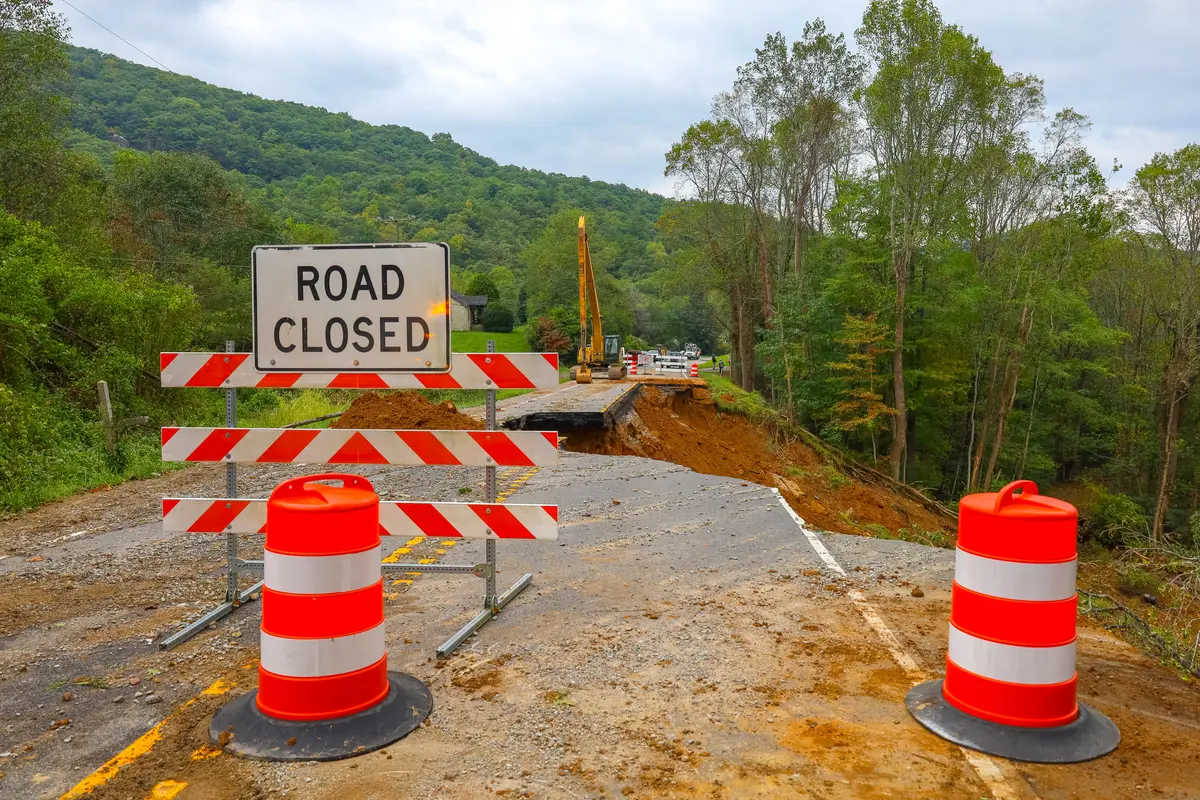
RTI research shows warnings didn’t always translate into action. Despite widespread, trusted alerts, RTI’s post-Hurricane Helene study found gaps in access and risk perception that limited how people responded.
Local context is key to driving behavior. People relied more on what they saw than on generalized warnings, pointing to the need for geographically specific, impact-based messages and clearer decision cues.
Community resilience is a powerful asset. Neighbor-to-neighbor support played a critical role during and after the storm, highlighting the importance of strengthening local networks alongside communication systems.
***Catastrophic Flood Warning***Potential Loss of Life***Seek High Ground***
In the days leading up to September 27, 2024, communities in Western North Carolina began receiving notifications via television, radio, and cellphone that sounded increasingly ominous. Hurricane Helene was creeping toward the Florida Gulf Coast, threatening to cause dangerous flooding and damage throughout the Southeastern United States, as far inland as Kentucky.
RTI researcher Katie van Werkhoven, PhD, a hydrologist specializing in flood forecasting, lives in Western North Carolina and was also preparing for the storm.
“It was a bit surreal; some colleagues and I were just wrapping up research on flood risk communication funded by the National Oceanic and Atmospheric Administration (NOAA), and suddenly there I was, playing the role of the flood warning recipient in the middle of what would become Western North Carolina’s worst storm since 1940,” said van Werkhoven.
The warnings about the storm were unfortunately accurate—Hurricane Helene produced catastrophic flooding in Western North Carolina, directly affecting hundreds of thousands of residents and resulting in more than 100 deaths attributable to the storm.
In the hurricane’s aftermath, van Werkhoven and two other RTI experts living in the affected area began to ask themselves and one another, "If the community received such dire warnings about the storm’s potential, why did it seem like many people didn’t perceive that it could be so bad?"
“That’s what we do as researchers: We ask a question and set out to see if we can find the answers. At RTI, we conduct research and provide technical support across the country and around the world. In this case, though, the answers were in our own backyards,” said van Werkhoven.
The researchers living in the area quickly got to work, proposing an RTI-funded effort to build on the evidence base around flood risk communications. This type of flood perception research fills a critical need in emergency response and community resilience; floods are the most common natural hazard worldwide, and intense rainfall that causes floods has become more frequent throughout the last century. Climate models predict more intense rainfall across most of the United States, occurring more frequently, over the next 75 years.
Better understanding how people perceive and act upon flood warnings is therefore not only an interesting research question—it can help save lives and reduce property loss in a future with more frequent and severe flooding. RTI leadership readily supported the proposal:
"Western North Carolina is a place I care about deeply and Hurricane Helene underscored how quickly flooding can overwhelm communities when warnings don’t translate into action,” said President and CEO Tim J. Gabel. "We’re proud to apply our expertise in flood modeling, risk communication, and forecasting to strengthen the state’s resilience.”
In the months following the hurricane, RTI partnered with Blue Ridge Resource Conservation and Development to conduct interviews and community listening sessions in eight of the North Carolina counties most impacted by the storm. The research investigated how participants from five groups—emergency responders, health and human service organizations, local authorities, community-based organizations, and the general public—received and responded to warnings ahead of and during the storm.
When Flood Warnings Don’t Translate to Action
The findings in the resulting report were organized around three main questions: Who had access to warnings, whether individuals had awareness of the storm and its severity, and what actions they took.
Overall, the research found that although flood warnings were widely available and trusted, many people did not fully understand or personalize the seriousness of the risk, which influenced their actions.
Communication—and Community—Matter
The findings and recommendations from the flood risk perception report highlight a need for expanded localized messaging—that is, messages tailored to specific geographical locations—as well as improved communication systems and sustained public education.
“The research points to shifting from ‘information delivery’ to a coordinated system that ensures people understand risk, trust the message, and take action through localized, redundant, and user-centered communication,” said van Werkhoven. This highlights the challenge of improving how people interpret risk—not just how they receive alerts.
Everyone has an important role to play in improving this resilience to natural disasters: National and regional warning centers, local officials, emergency management and first responders, the private sector, community groups, and individual households.
While it wasn't a specific focus of the study’s interview questions, RTI staff noted that they were inspired by the accounts they heard of community members coming together to help one another during and after the storm. From stories of people building a makeshift bridge to bring food and supplies to trapped neighbors, to a community pickleball court becoming a central relief supply hub, the critical role that communities play in helping each other was a major throughline during the interviews.
Improving flood risk communication will require sustained effort across systems and sectors, but it will also depend on strengthening the local networks that people turn to when it matters most. By aligning clearer messaging with those existing community ties, we can move closer to warnings that inform, protect, and lead communities to action.
Read the report by Noëlle Richa Siegfried, Schuyler DeBree, Katie van Werkhoven, Bryan Luukinen, Sarah Sheff, Kathy Vu, Serena Gilson, Jill A. Brown, Jessica Janc, & Jonathan Hartsell.
For nearly 70 years, RTI has partnered with communities, businesses, universities, and government leaders across North Carolina to turn science into solutions. From advancing health and defense to strengthening agriculture, energy, education, and economic development, our work helps tackle the state's most pressing challenges while creating opportunities for future growth and prosperity.