Insights





Key Takeaways
Consumer awareness of microplastics has increased dramatically. Search behavior and social media conversations have accelerated since 2023, fueled by new research and viral content.
The conversation has shifted from environmental concerns to personal health. Consumers increasingly associate microplastics with risks to their own health and the health of their families.
Many consumers are seeking practical ways to reduce exposure. Questions about bottled water, food packaging, tea bags, and everyday products dominate online discussions.
Influencers play a major role in shaping public understanding. While they often help translate scientific research, messaging can vary in accuracy and create confusion.
Organizations have an opportunity to build trust through clear, science-based communication. Consistent messaging and timely education can help close the gap between emerging research and consumer understanding.
A Surge in Awareness About Microplastics—Driven by Search and Social
Consumer interest in microplastics is a relatively recent phenomenon. Online search behavior shows that while attention remained relatively flat through the mid-2010s, interest began rising sharply around 2023 and has continued to climb since then.
Figure 1.
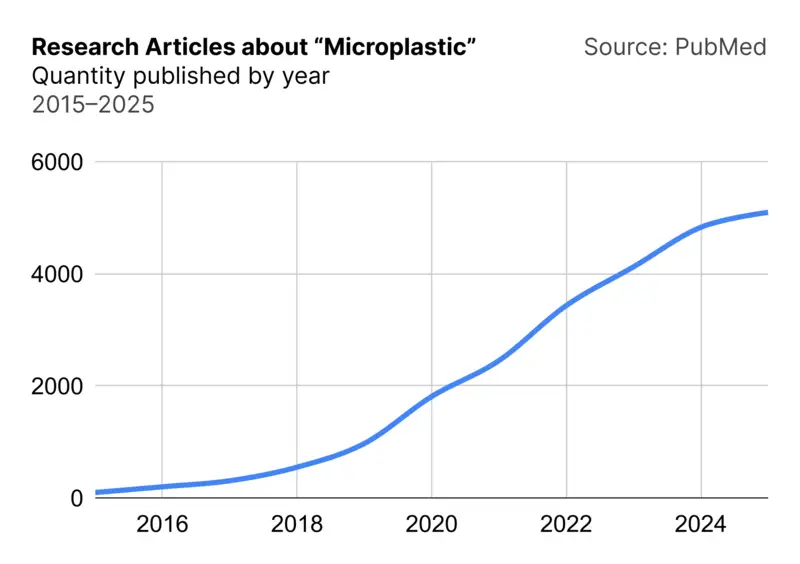
Figure 2.
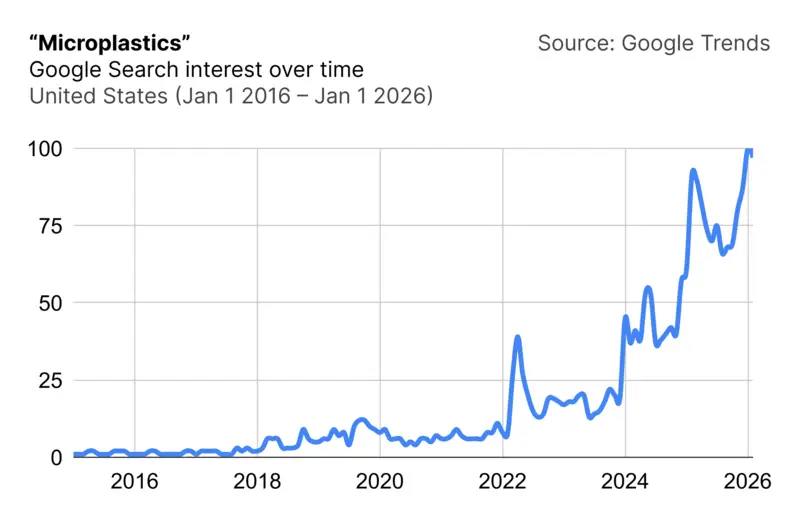
Searches for terms like “microplastics in water,” “microplastics filter,” and “what are microplastics” have increased dramatically, signaling growing curiosity—and concern—about both exposure and mitigation.
This rise in awareness is mirrored on social media. Since 2023, conversations about microplastics have increased across platforms such as Reddit, Instagram, Facebook, X, and others. But these conversations don’t grow steadily—they spike in response to key events.
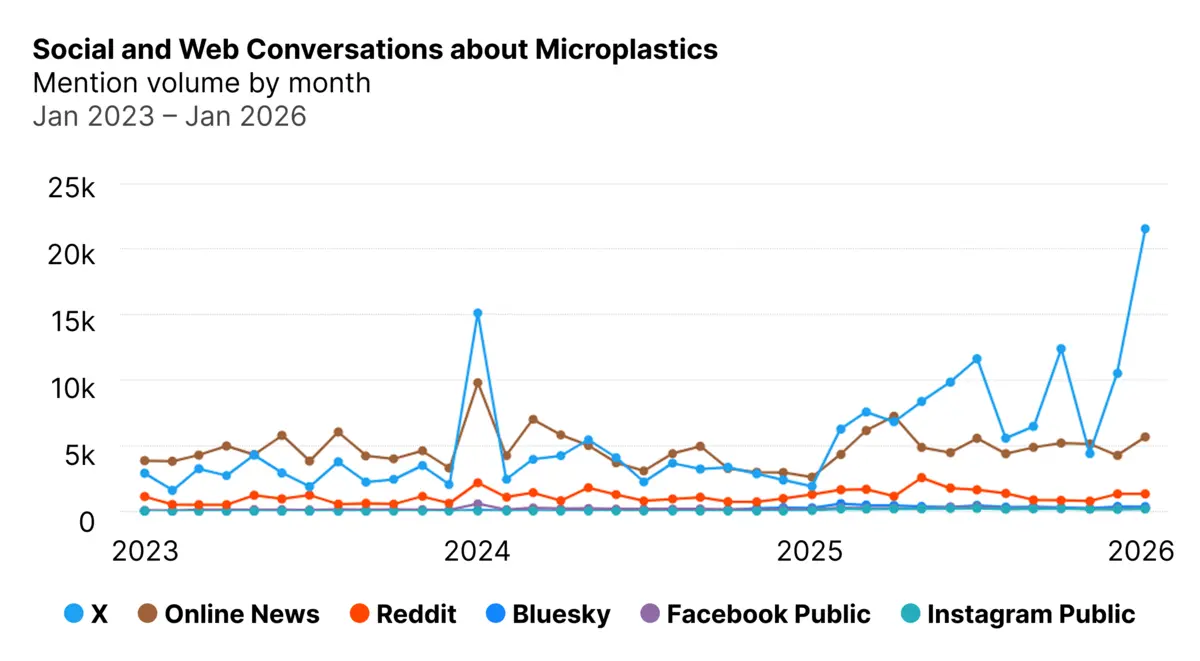
Figure 3.
Moments of heightened attention are often tied to new research findings or viral content. For example, public conversations surged following media coverage of research finding nanoplastics in bottled water and again after a widely shared social media post highlighted research suggesting that all major food categories contribute to daily microplastic intake.
These spikes underscore how quickly new information can shape public perception.
Plastics Evolved from Environmental Issue to Personal Health Concern
One of the most significant shifts in consumer perception is how microplastics are framed.
Historically, plastics were discussed primarily as an environmental issue. Today, that framing has evolved: Consumers are increasingly focused on personal health risks, with many concerned about the impact of microplastics on health outcomes such as cancer, chronic disease, and brain health.
This shift makes the issue more immediate and actionable—but also more emotionally charged. Microplastics are no longer seen as a distant environmental concern; they are perceived as something that directly affects individual and family health.
Understanding Microplastics Concerns: Research, Risk, and What to Do
Online discourse about microplastics clusters around three themes:
- Sharing and interpreting new research
- Understanding potential health risks
- Identifying ways to reduce exposure
Consumers are actively trying to make sense of emerging science—often pulling from news coverage, scientific studies, and content shared by influencers or peers.
However, the science is complex and evolving. As a result, much of the conversation reflects uncertainty: people asking questions, comparing interpretations, and seeking practical steps to protect themselves.
Where Consumer Microplastics Concerns Show Up Most
Consumer concerns are not abstract—they are tied to specific products and behaviors encountered in daily life. One of the most prominent concerns centers on bottled water and beverage packaging. Consumers debate whether microplastic exposure comes from the liquid itself or from the act of drinking directly from plastic containers. Others question whether alternatives, such as glass bottles, meaningfully reduce risk, while some claim these also contain microplastics. Simple directives like “stop drinking bottled water” are frequently shared, reflecting both heightened concern and a desire for clear solutions.
Tea bags are another focal point. Many consumers believe that certain tea bags release high levels of microplastics, prompting recommendations to switch to loose-leaf tea or brands perceived as plastic-free. These conversations illustrate how quickly specific products can become perceived as a microplastic risk.
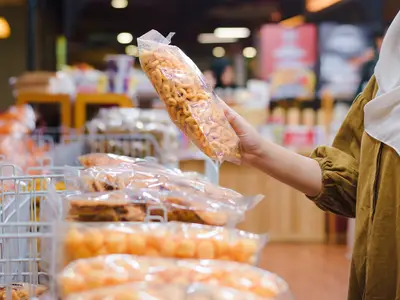
Concerns extend beyond beverages to food packaging more broadly. Influencers and consumers often reference chemicals and materials used in packaging such as phthalates, sometimes grouping them together under the umbrella of “microplastics” that leach into your food, and recommend others to not purchase products with plastic packaging. They instead urge consumers to choose fresh, unpackaged foods and eat at home as much as possible. This blurring of scientific terms highlights both the complexity of the issue and the challenge of communicating clearly about it.
Interestingly, influencers also cite scientific studies in their posts, which may elevate perceived credibility of their messaging, regardless of its accuracy.
“Microplastics Are Everywhere”: A Defining Sentiment
Across conversations, one sentiment stands out: Consumers increasingly believe that microplastics are ubiquitous—present in water, food, clothing, and household items—and difficult, if not impossible, to fully avoid.
This perception fuels a range of responses, from anxiety and resignation to motivation and action. While some individuals feel overwhelmed that microplastics are everywhere and conclude there is little they can do to avoid them, others actively seek to reduce or eliminate exposure, often making significant changes to products and behaviors despite scientific uncertainty.
The Role of Influencers and Information Gaps Around Microplastics
In the absence of widespread, coordinated public education efforts, influencers and online personalities are playing a major role in shaping the conversation.
Content from health and wellness influencers—including physicians and parents—often reaches millions of viewers and generates high engagement. These voices frequently translate scientific findings into recommendations, filling an information void but also introducing variability in accuracy and interpretation.
Communicating About Microplastics: What Organizations Should Know
The current landscape underscores that there is a significant gap between consumer concern and actionable guidance.
Consumers want to reduce exposure to microplastics, but they often lack clear, credible, and consistent information on how to do so.
There is a clear opportunity to address this gap and influence consumer knowledge and behaviors on microplastics, using a multi-pronged approach:
- Clear, consistent messaging: Information must be simple, credible, and reinforced over time
- Contextual communication: Messaging should meet consumers where decisions are made—on packaging, in stores, and at disposal points
- Alignment with innovation: Educate consumers about advancements in safer materials and packaging solutions
- Timely engagement: New research and policy developments provide critical moments to inform and guide public understanding
Navigating a Rapidly Evolving Space
The conversation around microplastics is not static. It is shaped in real time by scientific discovery, media coverage, and social amplification.
For organizations, this presents both a challenge and a powerful opportunity: how to communicate clearly about a complex, evolving issue while building trust with increasingly engaged—and concerned—consumers.
At RTI, we specialize in helping organizations navigate exactly this kind of landscape. By combining rigorous consumer insight, real-time discourse analysis, and decades of health communication research, our multi-disciplinary teams translate complexity into clarity—and insight into action.
Sign up for The Growth Brief newsletter to get insights in your inbox.
Disclaimer: This piece was written by Annice Kim (Senior Director, Center for Media Impact and Consumer Behavior Research), Imari Walker-Franklin (Research Chemist), and Stephanie McInnis (UX Researcher) to share perspectives on a topic of interest. Expression of opinions within are those of the author or authors.