Supporting dam resilience against worst-case scenarios
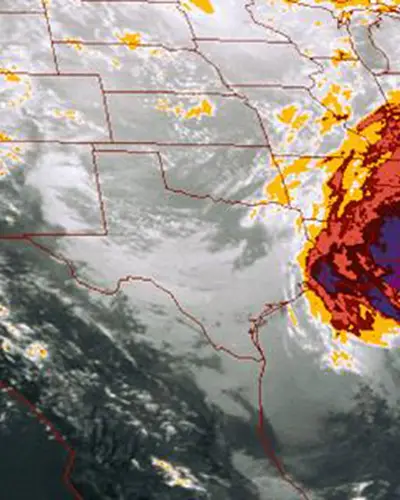
Probable Maximum Precipitation (PMP) defines the greatest depth of rainfall that is meteorologically possible at a given location, representing the upper bound of extreme storm potential. PMP is often required by regulatory agencies for applications related to dam safety and nuclear facility design. These values are used as inputs for extreme flood analyses and Probable Maximum Flood (PMF) studies, which support the design of dams and spillways, the assessment of spillway adequacy in existing structures, and the protection of critical high-hazard infrastructure. By quantifying the most extreme rainfall events theoretically possible, PMP ensures that critical facilities are designed to withstand the worst-case scenario—protecting lives, property, and the environment.
RTI's Advanced Probable Maximum Precipitation Methodology
RTI has advanced the traditional approach to determining PMP by integrating modern science and practical application. Our enhanced methodology employs a transposition procedure that positions storms directly over a site using the underlying extreme precipitation climatology—eliminating the need for additional adjustment factors. We recognize that turning PMP estimates into actionable input for PMF studies demands close coordination between meteorologists, hydrologists, and engineers. By identifying the storm spatial pattern and transposition location most likely to generate the largest flood volume, we deliver realistic storm structures—both spatial and temporal—that are seamlessly integrated into hydrologic models.
With unmatched expertise in precipitation frequency analysis for dam safety, RTI brings PMP into a probabilistic context, offering a modern, risk-informed perspective. This ensures that PMP is not only scientifically rigorous but also more meaningful for today’s critical infrastructure decisions—empowering safer, smarter, and more resilient designs.
We currently provide site-specific PMP values that are used by stakeholders in British Columbia through our MetPortal web application.
Learn More About Our Solutions
Meet the Experts
Meet the Experts
Navigate to
Victoria Sankovich Bahls

Victoria Sankovich Bahls
Navigate to
Kyle Chudler

Kyle Chudler
Navigate to
Debbie Martin