
Human interactions with artificial intelligences: Research agendas for education, health, creative expression, and governance
March 2026
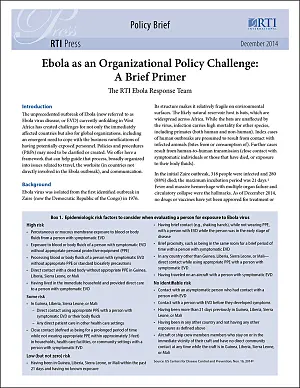
In response to the unprecedented Ebola outbreak in West Africa and its implications for global organizations, RTI International has developed a framework to guide the development of Ebola-related policies and procedures for institutions and companies. The framework, described in this policy brief, addresses broad issues related to travel, the worksite (in countries not directly involved in the Ebola outbreak), and communication. RTI used this framework to create organizational policies and procedures to deal with Ebola issues, based on guidelines from the Centers for Disease Control and Prevention.
 © 2026 RTI International. This work is licensed under a Creative Commons Attribution-NonCommercial-NoDerivatives 4.0 International License.