searchMECFS: An online, interactive platform to facilitate secondary use of biospecimens and associated research data from myalgic encephalomyelitis studies
September 2026
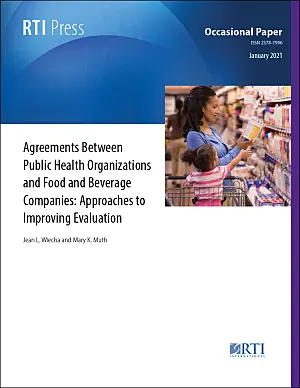
Efforts in the United States and abroad to address the chronic disease epidemic
have led to the emergence of voluntary industry agreements as a substitute for
regulatory approaches to improve the healthfulness of foods and beverages. Because of the lack of access to data and limited budgets, evaluations of these
agreements have often been limited to process evaluation with less focus on outcomes and impact. Increasing scientific scope and rigor in evaluating voluntary food and beverage industry agreements would improve potential public health benefits and understanding of the effects of these agreements. We describe how evaluators can provide formative, process, and outcome assessment and discuss challenges and opportunities for impact assessment. We explain how logic models, industry profiles, quasi-experimental designs, mixed-methods approaches, and third-party data can improve the effectiveness of agreement design and evaluation. These methods could result in more comprehensive and rigorous evaluation of voluntary industry agreements, thus providing data to bolster the public health impacts of future agreements. However, improved access to data and larger evaluation budgets will be needed to support improvements in evaluation.
 © 2026 RTI International. This work is licensed under a Creative Commons Attribution-NonCommercial-NoDerivatives 4.0 International License.