Newsroom
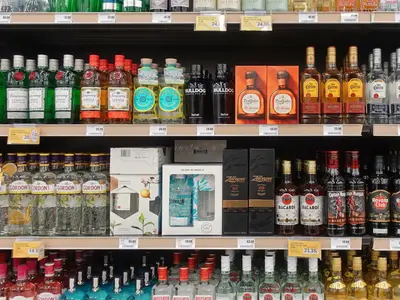
RESEARCH TRIANGLE PARK, N.C. — A modest price floor on low-cost distilled spirits could reduce total U.S. alcohol sales and reduce alcohol-related harms, according to a new study led by RTI International, an independent scientific research institute.
Published in Addiction, the exploratory study estimated that a hypothetical minimum price of 80 cents per standard drink of spirits would reduce total alcohol sales by 1.7%. The model accounted for consumers potentially buying beer, wine or ready-to-drink beverages instead.
“Small changes in the prices of the lowest-cost spirits could influence alcohol purchasing across beverage categories,” said Doris Gammon, a senior public health researcher at RTI and lead author of the study. “This study offers U.S.-specific evidence that can help researchers and policymakers understand how different price floors might affect overall alcohol sales.”
Researchers analyzed weekly, product-level retail sales and prices from November 2022 through November 2023 in 28 states where alcohol is sold through private retail systems. The data covered off-premises sales, such as purchases from liquor, convenience, grocery, drug and mass-merchandise stores.
The team first estimated how sales changed when the prices of spirits, beer, wine and ready-to-drink beverages changed. Researchers then simulated minimum prices ranging from 10 cents to $1.10 per standard drink of spirits. A standard drink was defined as containing 0.6 fluid ounces of pure alcohol.
At the 80-cent level, the model estimated a reduction of 782.9 million standard drinks, or 1.7% of total alcohol sales, during the 52-week study period. The price floor would have affected 5,374 of 26,249 spirits products, or 20.5%.
The authors noted that the analysis cannot establish causation and does not account for potential differential changes in purchasing behaviors across population characteristics (e.g., alcohol consumption patterns). The retail data are transaction-based data that do not link to purchaser characteristics; the data also exclude on-premises purchases (e.g., sales in bars and restaurants).
The study was supported by the Centers for Disease Control and Prevention.
Read the full study (via Addiction)
Learn more about RTI’s substance use expertise




RTI International is an independent scientific research institute dedicated to improving the human condition. Our vision is to address the world's most critical problems with technical and science-based solutions in pursuit of a better future. Clients rely on us to answer questions that demand an objective and multidisciplinary approach—one that integrates expertise across social, statistical, data, and laboratory sciences, engineering, and other technical disciplines to solve the world’s most challenging problems.
For more information, visit www.rti.org.