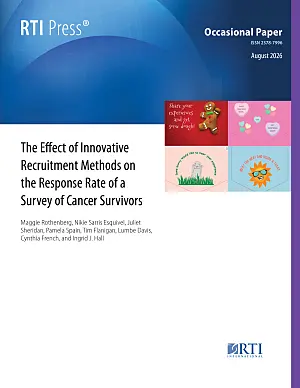
The effect of innovative recruitment methods on the response rate of a survey of cancer survivors
Key Points
- Impact statement: Seasonally tailored postcard reminders, as well as sending a second survey invitation, may contribute to an increase in response rates.
- Seasonally tailored postcard reminders increased survey response rates by an additional 4% to 15% among non-respondents.
- Multiple participant contacts, including a second survey invitation, were associated with the highest response rates.
- Simple, attention-grabbing outreach materials may help improve participation in web-based surveys of cancer survivors.
Abstract
We examined the impact of colorful mailing envelopes and seasonally tailored postcard reminders on web-based survey response rates of breast cancer survivors within a mammography screening study. We used colorful, innovative recruitment materials to capture the recipients’ attention and increase the likelihood of survey completion, thereby improving response rates. Eligible participants (N = 6,277), recruited from three statewide cancer registries, were sent a survey invitation in one of three envelopes. Non-respondents received one seasonally tailored follow-up postcard reminder that featured a catch-phrase relevant to both the season and survey completion. Response rates following the survey invitation ranged from 6 to 19% across eight cohorts, regardless of envelope type. Follow up with the postcard reminder boosted response rates an additional 4 to 15%, with overall response rates ranging from 15 to 28% per cohort. The highest response rate was in Cohort 2; this cohort was contacted three times due to a supplemental survey invitation that preceded the postcard reminder. This study was not randomized, powered, or otherwise designed to test the casual impact of envelope color or postcard design. Findings from this analysis suggest that using seasonally tailored postcard reminders, as well as sending a second survey invitation, may contribute to an increase in response rate.
 © 2026 RTI International. This work is licensed under a Creative Commons Attribution-NonCommercial-NoDerivatives 4.0 International License.
Meet the Experts

Navigate to
Nikie Sarris Esquivel

Nikie Sarris Esquivel
Navigate to
Juliet Sheridan

Juliet Sheridan
Navigate to
Pamela Spain