Insights



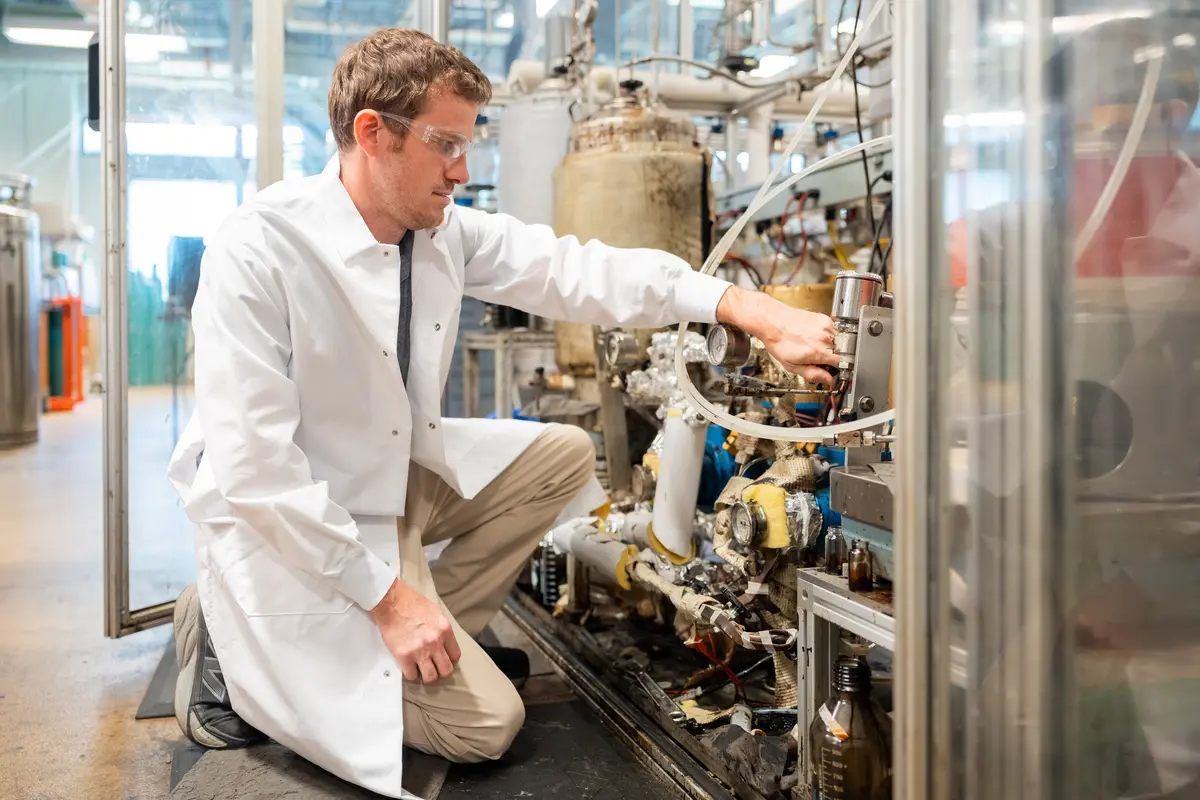
Key Takeaways
Successful scaling starts with understanding the market. Identifying the right beachhead market and customer needs helps guide commercialization strategy.
Validation data is critical for commercialization. Investors, customers, and partners need credible technical, economic, and environmental performance data.
The right infrastructure and partners can reduce scale-up risk. Pilot facilities, engineering expertise, and support for commercialization help technologies move toward deployment more efficiently.
Some of the best innovations start with a simple idea. But transforming a great idea into a market-ready technology isn’t for the faint of heart. It requires research, planning, validating, and the right strategy for scaling.
In today’s industrial and energy sectors, technologies are more complex than ever. Often described as “deep tech” or “tough tech,” they integrate multiple systems and must compete with established, optimized technologies. The pathway from prototype to tech commercialization for startups can take years, and the smallest missteps along the way can be costly.
To overcome these challenges, it’s critical to step back and ask the right questions before scaling your technology. Ask your team these five questions to increase confidence in your technology’s scalability.
1. Which Markets Are You Targeting and Why?
Your target market influences nearly every decision you make, including technology design and scale-up requirements.
Instead of narrowly focusing on long-term markets, a successful startup will need to identify a “beachhead” market – a market consisting of the niche customers you’d like to target when launching your product. Ideally, your technology will quickly identify and solve a clear problem for its intended customer. Establishing a clear beachhead market by talking to potential customers to address their needs can set a strong foundation for generating early revenue, validating performance, and building momentum.
Flexibility is equally as important. Remember that the market is ever changing, so be prepared to adjust or even pivot depending on the magnitude of change. Regular customer discovery, engagement with industry stakeholders, and staying up to date on research will setup a successful path towards scaling your technology.
2. Do You Truly Understand Your Customers' Needs?
Research and understanding market needs can better define who your target client will be and how you can help them. This includes a deep understanding of their technical, economic, operational, and social needs.
What performance thresholds matter the most? What cost targets must you hit? What constraints exist in real-world operations?
Answering these questions will require direct engagement with customers across their industry, from technical teams to operators and decision-makers. This ensures your technology addresses their needs while seamlessly fitting into their environment.
Building with the end user in mind will set your startup on a path for success when scaling.
3. What Do You Need to Prove?
Scaling a technology requires demonstrations that point to a promising future. Startups must generate the right data to build confidence among their investors, partners, and intended customers. At each step from lab to bench to pilot, data are required to demonstrate performance against key technical and economic criteria to inform next steps.
Below are key components to consider when proving your technology:
- Economic viability: Can you demonstrate that your technology meets cost targets at scale?
- Technical performance: Does your technology meet the requirements and standards set by the customer and industry?
- Environmental impact: What is the broader impact of your technology, and have you considered its lifecycle environmental impacts (e.g., emissions)?
- Regulation compliance: Can your technology meet the applicable standards and regulation requirements?
It’s best to have a solid understanding of these requirements even for early-stage startups. Having strong, credible data from prototype and pilot demonstration projects, conducted by reputable third parties, can accelerate commercialization by reducing perceived risk.
4. What are the Biggest Risks for Technology Scaling and How Can You Overcome Them?
Scaling even the best-performing prototypes will always involve some layer of risk. Identifying what those risks might be before moving technologies from the lab to commercialization is vital for any startup to succeed.
Common tech scaling challenges include:
- Performance changes between lab and pilot scale
- Cost overruns
- Supply chain constraints
- Integration complexities in real-world environments
- Gaps in scale-up expertise or operational experience
While risk exists at any stage of the scaling process, the right partner can easily navigate current risks and mitigate future risks before they appear. The ideal partner will bring years of experience in engineering and technology commercialization, with a facility that specializes in scaling your technology needs. The earlier you identify challenges and partners that can manage them, the better your technology will be positioned for rapid commercialization.
5. Do You Have the Right Partners, Infrastructure, and Path to Commercialization?
As your technology matures, the pathway to technology commercialization becomes more complex. It requires an ecosystem of investors, partners, facilities, and materials to move forward.
Common requirements for scaling include:
- Access to pilot-scale infrastructure and testing environments
- Engineering and technical expertise
- Commercialization support (e.g., market analysis, partner scouting, and regulatory strategy)
- Strategic partners (e.g., investors, developers, supply chain actors, and customers)
Defining your path towards scalability requires identifying the right partners. We recommend researching which partners will help you achieve your milestones and move forward with technology deployment. The right partners will help de-risk your technology, accelerate your timeline, advise on commercialization goals, and position your technology for investment and real-world deployment.
The RTI Pilot Xcelerator Helps Startups Scale Technology
We have scaled many industrial and energy technologies through the RTI Pilot Xcelerator – one of the few facilities of its kind in the nation. It bridges the gap between promising prototypes and real-world applications. We provide the specialized infrastructure, resources, and expertise for startups to transform their technologies into validated, deployment-ready solutions.
In additional to technology development and demonstration, RTI offers lab-to-scale facilities for technology development and advisory services including:
- Techno-economic analysis (TEA)
- Life cycle assessment (LCA)
- Regulatory assessment
- Market intelligence
- Supplier/partner scouting
We have a strong track record of ensuring startups are prepared for site demonstration and scaling. Navigating pathways towards scaling your technology can be daunting. In an increasingly competitive market, it’s important to prepare your prototype for next-level scaling. Our team of engineers at RTI is excited to be part of the journey to turn your great idea into a globally impactful innovation.
Explore the Latest in Industrial and Energy Technology Scaling
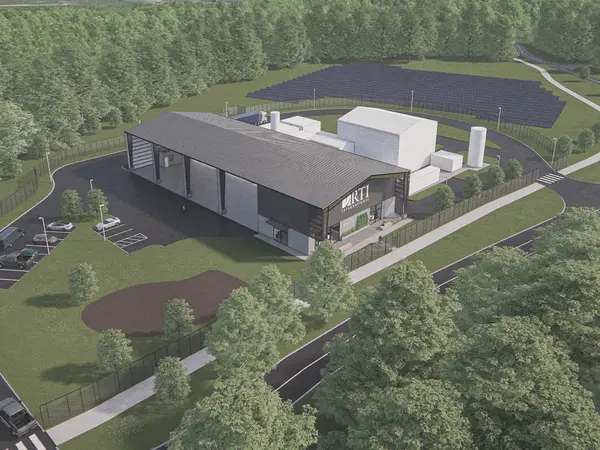
Demonstrating Bioprocessing Technology
RTI and CarbonBridge Inc. are collaborating to demonstrate a new bioprocessing technology that will convert gases into valuable chemical products, including next-generation fuels. This work will be demonstrated at the RTI Pilot Xcelerator.

Developing Novel Carbon Capture Technology
RTI developed a non-aqueous solvent that captures carbon emissions at point source with funding from the U.S. Department of Energy (DOE). In partnership with SLB, a global leader in energy, and CEMEX, a construction materials company, this technology has been used in industrial settings.

Demonstrating Sustainable Aviation Fuel Production
Aether Fuels, a sustainable fuels technology company, partners with RTI to demonstrate its breakthrough, next-generation aviation fuel production solution in a fully integrated one-barrel-per-day line. This project will take place at the RTI Pilot Xcelerator.
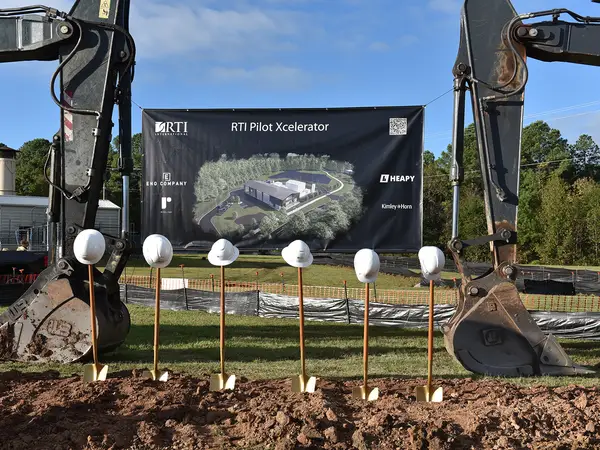
Inside RTI's Pilot Xcelerator Expansion
RTI is expanding the RTI Pilot Xcelerator with the new facility opening this fall. It will feature plug-and-play infrastructure with configurable bays, control rooms, indoor laboratories, and safety systems.
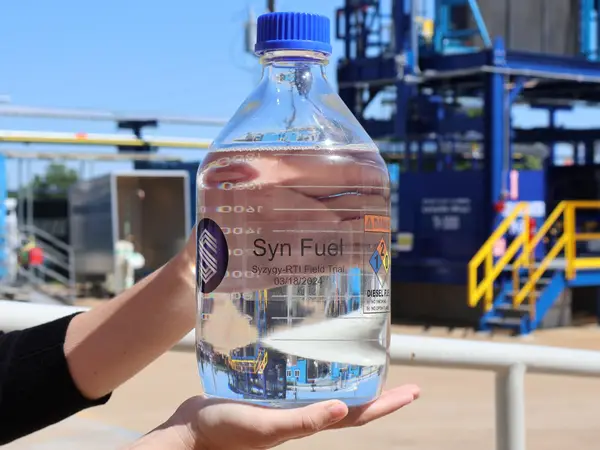
Converting Carbon and Methane Into Fuel
RTI and Syzygy Plasmonics successfully demonstrated an all-electric, carbon-to-fuel production pathway at the RTI Pilot Xcelerator.
Xcelerate Your Technology With RTI. Request More Information Today.
Disclaimer: This piece was written by Steve McManus (Business Development Lead, RTI Pilot Xcelerator) and Ana Isabel Diaz (Business Development & Innovation) to share perspectives on a topic of interest. Expression of opinions within are those of the author or authors.