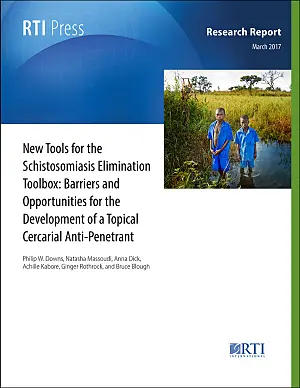
New tools for the schistosomiasis elimination toolbox: Barriers and opportunities for the development of a topical cercarial anti-penetrant
Abstract
Schistosomiasis is a neglected tropical disease (NTD) affecting about 260 million people worldwide. Elimination of schistosomiasis remains a challenge because of high reinfection rates and limitations of current treatment guidelines and disease control interventions. Despite over 70 years of research on schistosome cercariae anti-penetrants, a personal protective product (PPP) remains elusive for the prevention of schistosomiasis. In this paper we explore perceptions of topical PPPs to identify potential opportunities and barriers in the development, promotion, and use as a tool to control and prevent schistosomiasis. Results from key informant interviews suggest that despite recognized benefits of a cercarial anti-penetrant, translation of research into a practical PPP for endemic areas is hindered by two critical issues: (1) minimal available evidence to demonstrate effective and practical use of topically applied products in community-based settings and (2) limitations of current business models to sustain product availability among high-risk groups in low-income settings. Additionally, introduction of a PPP would require an intensive behavioral change communication strategy to reinforce and enable routine use of the product. The potential additive impact of a PPP on reducing point of source infections, in combination with a comprehensive elimination strategy that includes preventive drug treatment, snail control, and improved water and sanitation, may still present an effective strategy to reduce moderate to high intensity of infection among high-risk groups, but requires additional translational research and business model development.
 © 2025 RTI International. This work is licensed under a Creative Commons Attribution-NonCommercial-NoDerivatives 4.0 International License.