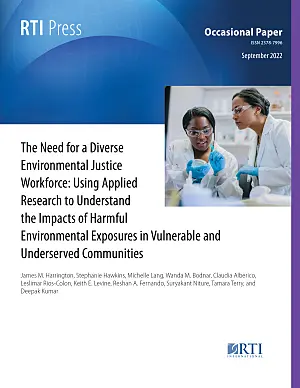
The need for a diverse environmental justice workforce: Using applied research to understand the impacts of harmful environmental exposures in vulnerable and underserved communities
Key Points
- Protecting all people from the harmful effects of environmental exposures relies on the coordinated efforts of scientific researchers, regulatory agencies, legislators, and the public.
- Environmental justice addresses the disproportionate impact that harmful environmental exposures have on individuals and communities who are minoritized and marginalized.
- It has long been known that environmental problems disproportionately impact these groups; however, addressing these problems has been impeded by structural racism and other biases.
- Developing effective interventions to eliminate these disparities requires a more diverse and inclusive modern workforce produced by a bottom-up approach beginning with education and professional development of the next generation of researchers.
Abstract
Protecting all people from the harmful effects of environmental exposures relies on the coordinated efforts of scientific researchers, regulatory agencies, legislators, and the public. Environmental justice addresses the disproportionate impact that harmful environmental exposures have on individuals and communities who are minoritized and marginalized. It has long been known that environmental problems disproportionately impact these groups; however, addressing these problems has been impeded by structural racism and other biases. Developing effective interventions to eliminate these disparities requires a more diverse and inclusive modern workforce produced by a bottom-up approach beginning with education and professional development of the next generation of researchers. The most effective approaches to addressing inequities rely on active input from impacted populations to ensure cultural and social acceptance and adoption of interventions. Credibly pursuing these efforts in a sustainable, inclusive manner will require a concerted shift in workforce demography. One potential strategy to address these workforce disparities features academic-industry partnerships with targeted professional development programs aimed at minoritized and underserved populations.
 © 2026 RTI International. This work is licensed under a Creative Commons Attribution-NonCommercial-NoDerivatives 4.0 International License.



Meet the Experts

Navigate to
Leslimar Ríos-Colón

Leslimar Ríos-Colón
Navigate to
Keith E. Levine

Keith E. Levine
Navigate to
Reshan Fernando