Insights


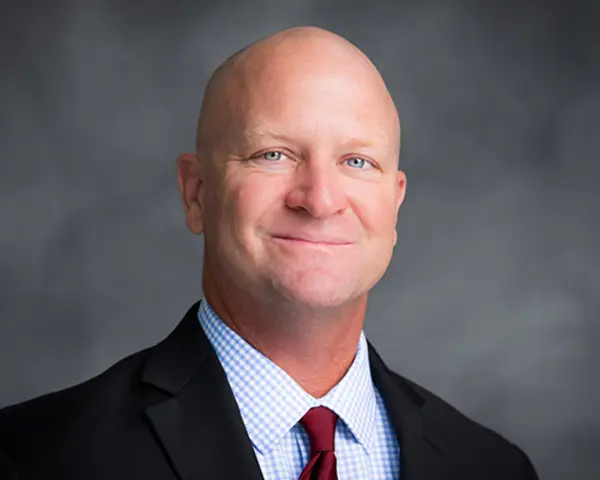
In 2009, Marty Lail, a chemist at RTI, took a significant step toward solving a clean energy problem.
Industrial facilities and fossil fuel-based power plants emit large amounts of carbon dioxide (CO₂). Yet industry struggled to adopt a cost-effective technology that could capture those emissions before they entered the atmosphere. The most promising technologies required massive amounts of energy and customized infrastructure, making them costly and impractical for widespread use.
Seeking a solution, Lail tested hundreds of solvents in RTI’s laboratories to identify formulations that could require less energy during operation.
He beamed with excitement when his team formulated a promising solvent: one that reduced energy consumption associated with water use, minimized corrosion, and had the potential to lower the overall cost of point-source carbon capture.
It worked in the lab,” said Lail. “But scaling it was largely unknown at the time because it was a first-of-a-kind approach. We had to demonstrate that the solvent could work in a much larger setting and across different industrial applications.”
For innovators, developing a promising technology in a lab is only the beginning. The next challenge is scaling it into a commercially viable system that is a thousand times larger, or more.
Will the technology remain cost-competitive at an industrial scale? Can the materials withstand continuous operations? Can the technology be manufactured reliably and safely?
Pilot testing provides the evidence needed to determine whether a technology can perform under real-world conditions or whether it needs to return to the lab for reformulations.
The history of RTI’s pilot-scale technology facility
Lail’s experience was not unique. Across RTI, researchers were developing technologies that showed promise in the lab but required larger-scale testing before advancing to commercialization. As demand for pilot-scale capabilities grew, RTI leaders began asking a critical question: Where could these technologies be tested under real-world operating conditions?
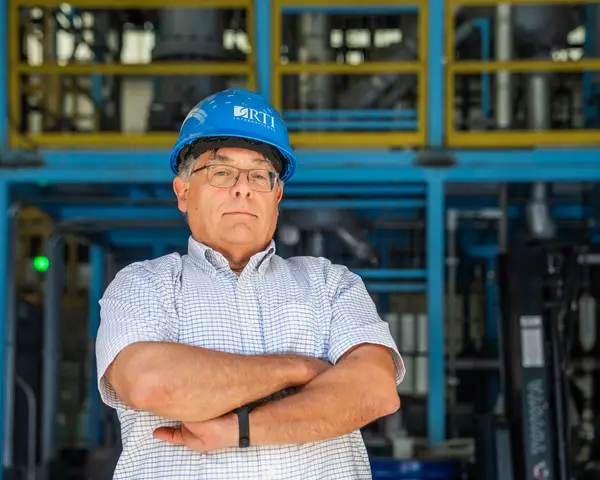
David Dayton, a senior fellow at RTI, sought to answer this question. In 2010, with funding from the U.S. Department of Energy’s Advanced Research Projects Agency-Energy (ARPA-E), he led a project studying catalytic biocrude production in a novel, short-contact-time reactor.
Dayton’s team needed a facility that could accommodate a 35-foot-tall circulating fluidized bed reactor, a complex structure of interwoven pipes, taller than a three-story building.
“We searched for warehouse space in the area that could accommodate such a system, and we came up short—literally,” Dayton laughed. “Most warehouse space had 20–30-foot ceilings.”
When Dayton’s team realized they would have to upfit a facility with the technology before the project started and decommission it after the project was complete, an alternative RTI site was suggested.
Neither Dayton nor Lail knew it, but both of their projects were paving a pathway for the development of a pilot-scale proving ground at RTI’s headquarters in Research Triangle Park.
The rest was history,” Dayton said. “We developed a new critical asset at RTI with facilities and capabilities that turned into dozens of additional projects.”
In 2013, RTI opened the Energy Technology Development Facility (ETDF)—the predecessor to the RTI Pilot Xcelerator.
The early days of the ETDF featured a simple layout, housing the two major systems:
- 1-ton-per-day biomass pyrolysis unit, which converts biomass into biocrude
- Carbon capture demonstration unit
Over the years, the facility added more core processing units, including:
- Synthetic fuels production system
- Hydrocarbon reforming technologies
- Advanced heat-transfer technologies
- Additional carbon capture systems that use solid sorbents
The ETDF was originally designed to scale RTI’s homegrown technologies. Through word-of-mouth, outside companies heard about our expertise, infrastructure, and capabilities, and in 2023, the ETDF hosted its first pilot demonstration of an external client’s technology.
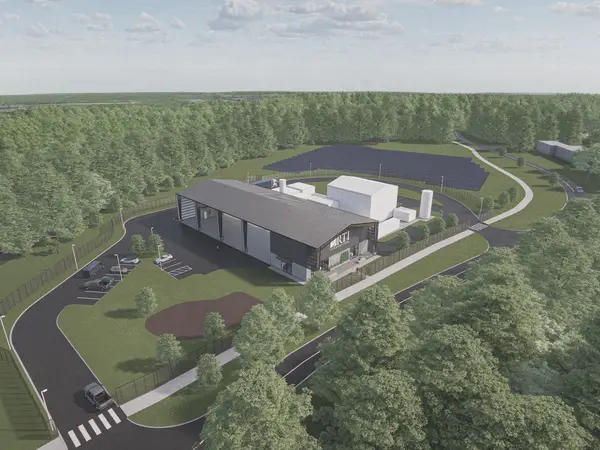
In 2025, RTI rebranded the ETDF as the RTI Pilot Xcelerator and expanded the facility by 15,000 square feet, more than double its previous capacity. The new name reflects a broader mission to address the needs faced by the entrepreneurial community by scaling technologies across energy and other industrial sectors while also providing commercialization services. RTI opened the expanded facility in 2026.

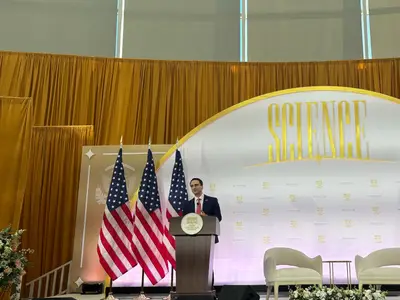
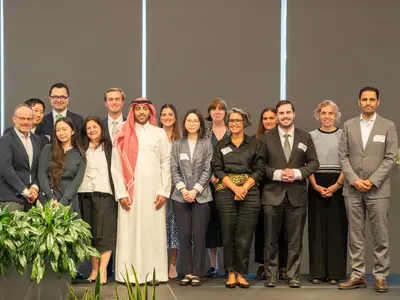
The RTI Pilot Xcelerator grand opening celebration in 2026.
RTI Pilot Xcelerator facility history
2009
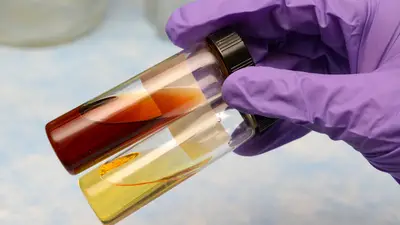
Scientists at RTI develop technologies that need validating through a pilot-scale demonstration.
2013
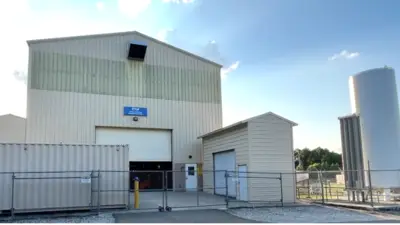
The Energy Technology Development Facility (ETDF) opens.
2023
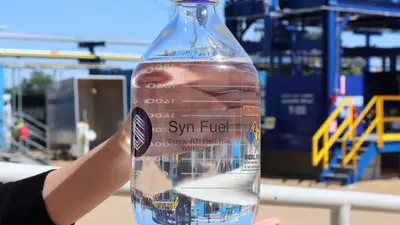
The ETDF hosts its first pilot demonstration for an external client.
2025
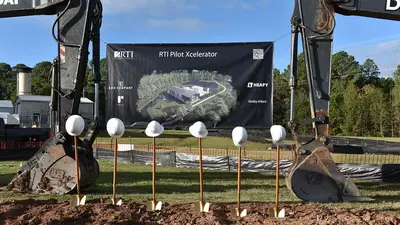
RTI rebrands the ETDF to the "RTI Pilot Xcelerator" and announces expansion plans.
2026
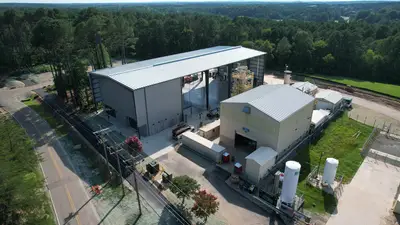
The second facility opens, doubling the capacity of the RTI Pilot Xcelerator.
Pilot-scale technology testing for energy innovation
Today, the RTI Pilot Xcelerator is the only privately owned pilot facility in the Southeast and one of a few in the United States. As an independent third party, we give innovators fast access to the infrastructure, expertise, and flexibility needed to test technologies under real-world conditions before making large commercial investments.
Scientists and engineers at the RTI Pilot Xcelerator are diligently working to bridge the gap between promising prototypes and industrial applications through pilot-scale demonstrations. We provide a platform where innovators can prove their ideas, demonstrate their impact, and ensure they are ready for the market—all under one umbrella. We bring together expertise across RTI, including engineering, operations, analytical chemistry, logistics, data analytics, technoeconomics, and commercialization with the shared goal of turning innovations into deployment-ready solutions.
Our team works with clients—from entrepreneurs and Fortune 500 companies to government agencies and commercialization ecosystem partners—to guide them through every step of the innovation process, including proof-of-concept validation, pilot demonstrations, and commercialization support.
Overcoming the valley of death in technology commercialization
The RTI Pilot Xcelerator’s mission is simple: transforming technologies into validated, deployment-ready solutions that reduce scale-up risk and accelerate commercialization for innovators ready to prove, not just pitch.
Most technologies must cross the “valley of death,” the funding and capability gap between early scientific research and market readiness. Pilot testing is critical at this stage, but building and operating a pilot facility is expensive. Startups can run out of money while trying to prove their technology before they secure the investment needed to advance it.
Sameer Parvathikar, the program director of the RTI Pilot Xcelerator, helps companies overcome the “valley of death” by reducing risks that prevent promising technologies from reaching commercial deployment.

Innovators and entrepreneurs face a lot of challenges when de-risking their technologies,” Parvathikar said. “They must address technical, economic, operational, and market risks, and that requires a team with a broad set of expertise.”
His approach includes asking his clients the following questions:
- Does the technology work in the real world?
- Can it operate reliably at scale?
- Is there a market for it?
Recently, Parvathikar worked with Syzygy Plasmonics, a company developing an all-electric pathway that converts carbon dioxide into sustainable aviation fuel. Through a pilot-scale demonstration at the RTI Pilot Xcelerator, his team helped validate Syzygy’s technology under real-world conditions. Within two years of this demonstration, Syzygy announced plans to build its first commercial plant in Uruguay.
Flexible pilot-scale testing facilities and technical expertise
The Pilot Xcelerator bridges the gap between early-stage research and development and commercial deployment by providing the engineering expertise and flexible space needed to generate real-world data that attracts investors and reduces technology risks.
Matt Cooper, the facility manager of the RTI Pilot Xcelerator, compares the facility to a farmers market. “Think of each open bay as a vendor at the farmers market,” he said. “The space is customizable to whatever technology we are working on at the time.”
RTI built its original energy facility around core processing units. While this design proved effective for specific technologies, it was limiting. When conversations emerged about an expansion, the team proposed building bays that could be customized to the technology instead of the technology being customized to the space. The expanded Pilot Xcelerator features plug-and-play bays that can host process skids tailored to each client’s needs.
Each bay provides all utilities that are typically needed for pilot-scale demonstrations in the industrial space, including power, steam, waste treatment and management, gases, and other feedstock supplies.
In addition, the facility has indoor workspace for business collaboration and control rooms for process and safety monitoring. Equipped with a kitchen, restrooms, and monitors, the space offers innovators the amenities they need to work comfortably and focus on advancing their technologies.
Cooper also highlighted the advantage of the Pilot Xcelerator being located on the campus of one of the nation’s largest research institutes.
The facility itself is impressive because we can take your technology and provide everything needed for a pilot-scale demonstration,” stated Cooper. “Our clients also have access to additional lab space on RTI’s main campus, including analytical measurement labs, small-scale process development labs, and materials synthesis and testing labs. This can be crucial for fine-tuning a technology before it’s ready for bigger demonstrations.”
Technology commercialization consulting and advisory services
Successful commercialization requires more than proving that a technology can scale. High-impact technologies will only realize their potential if they are aligned with the needs of the market and are compatible with government regulations and other stakeholder requirements.
Under the guidance of Steve McManus, a business development leader for the Pilot Xcelerator, RTI tapped into its broad expertise to provide a wide range of commercialization services to energy innovators through the U.S. Department of Energy’s Vouchers Program, including:
Techno-economic analysis
Life cycle assessment
Market intelligence
Customer discovery
Regulatory strategy development
Supplier and partner scouting
Community impact assessment
We provide these services to RTI clients, beginning with a holistic needs assessment that reviews the client’s overall commercialization maturity and identifies customized technical and business services to close gaps.
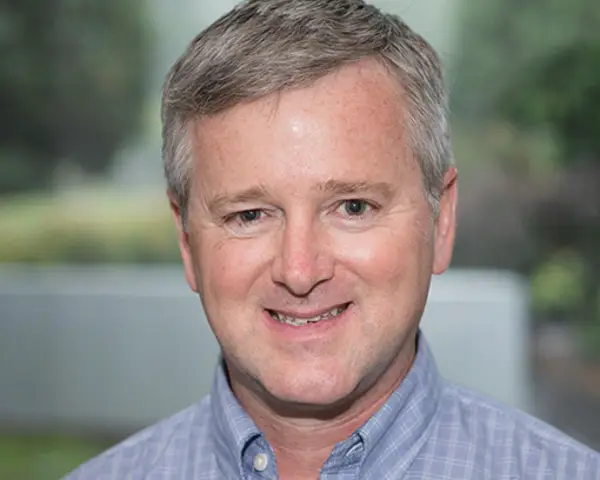
Innovators shouldn’t have to navigate the commercialization landscape alone,” McManus said. “Our goal is to provide all the resources our clients need to prepare their technology and business for the next step, a commercial demonstration project, and set them up for success as they take their technology to the next level.”
Helping the next generation of inventions succeed

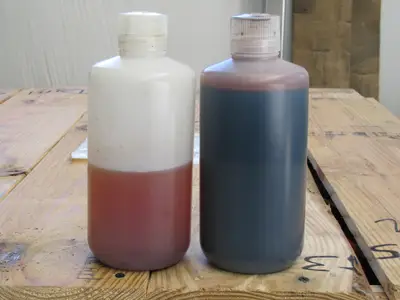
RTI's carbon capture solvent developed by Marty Lail.
Years ago, when Lail’s team found a carbon capture solvent that worked in a lab, they solved only the first part of the challenge. Over the years, the technology advanced through pilot demonstrations at the RTI Pilot Xcelerator and larger facilities, including the National Carbon Capture Center in Wilsonville, Alabama, and Technology Centre Mongstad in Norway. The success of those demonstrations led to a partnership with SLB, a global energy technology company, in 2022, giving the company an exclusive license to the technology.
The progress—from laboratory discovery to licensed commercial technology—illustrates the purpose of the RTI Pilot Xcelerator: helping innovators generate the technical evidence, partnerships, and market confidence needed to move promising technologies toward deployment.
Seeing the solvent move from a simple idea in a lab to being exclusively licensed has been extremely rewarding,” Lail mentioned. “A pilot demonstration was critical to the success, and it gives me great satisfaction to help clients overcome the challenges of scale-up when bringing their technology to the marketplace.”
Explore the latest technologies being demonstrated at the RTI Pilot Xcelerator
Demonstrating bioprocessing technology
RTI and CarbonBridge Inc. are collaborating to demonstrate a new bioprocessing technology that will convert gases into valuable chemical products, including next-generation fuels.
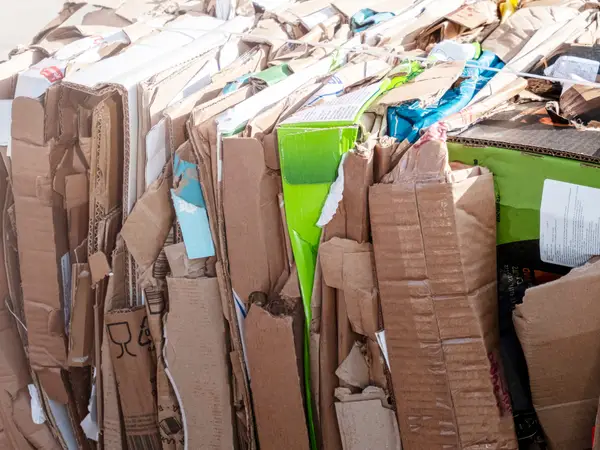
Exploring new uses for common minerals and used cardboard
The Department of Energy (DOE) awarded RTI two projects. One project focuses on converting abundant natural minerals into critical materials for advanced manufacturing, and the other explores a new way to recycle cardboard boxes using innovative anaerobic digestion technology.

Demonstrating sustainable aviation fuel production
Aether Fuels, a sustainable fuels technology company, partners with RTI to demonstrate its breakthrough, next-generation aviation fuel production solution in a fully integrated one-barrel-per-day line.
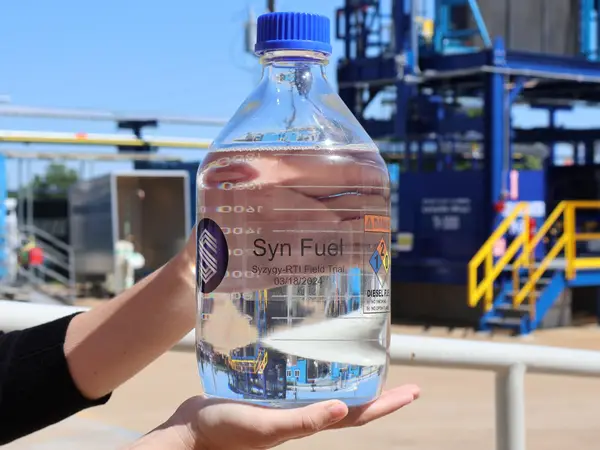
Converting carbon and methane into fuel
RTI and Syzygy Plasmonics successfully demonstrated an all-electric, carbon-to-fuel production pathway at the RTI Pilot Xcelerator.
Disclaimer: This piece was written by Lauren Greene (RTI International | Marketing) to share perspectives on a topic of interest. Expression of opinions within are those of the author or authors.