RTI uses cookies to offer you the best experience online. By clicking “accept” on this website, you opt in and you agree to the use of cookies. If you would like to know more about how RTI uses cookies and how to manage them please view our Privacy Policy here. You can “opt out” or change your mind by visiting: http://optout.aboutads.info/. Click “accept” to agree.
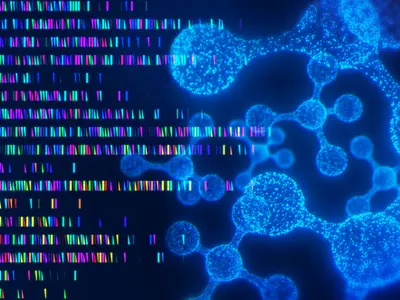
Functional studies of how early-life interventions shape the airway microbiome remain scarce. Here, we performed metagenomic sequencing of 704 longitudinal nasal swabs from infants with and without cystic fibrosis (CF) to construct and characterize a non-redundant gene atlas of the infant nasal microbiome. We aimed to determine how the nasal microbiome is perturbed by early therapies, as CF is commonly treated with inhaled hypertonic saline to improve mucociliary clearance. We found functional and compositional microbiome changes linked to inhalation therapy, including an expansion of salt-associated transporter genes and a community shift toward CF-associated microbial opportunists, including Haemophilus influenzae and fungi, carrying the identified salt-associated transporter genes with high sequence and structural identity. Hypertonic, compared with isotonic, saline accelerates H. influenzae growth and induces efflux pumps linked to antibiotic tolerance in vitro. This study establishes a reference framework for functional airway microbiome research, enabling the examination of therapeutic perturbations and their impact on microbial adaptation.
RTI shares its evidence-based research - through peer-reviewed publications and media - to ensure that it is accessible for others to build on, in line with our mission and scientific standards.