Tracking PFAS in Private Wells through Participatory Science


Experts at RTI are discovering more ways that Americans can be exposed to PFAS, the contaminants known as “forever chemicals.” In our latest study on these chemicals, completed in partnership with a North Carolina State University team led by Dr. Jacqueline MacDonald Gibson, we found that private wells are at high risk of PFAS in drinking water.
Lead author Erica Wood and co-principal investigator Jennifer Hoponick Redmon are dedicated to uncovering sources of contamination, especially those that can harm children and unsuspecting consumers. We sat down with them to discuss the results of their study on forever chemicals in well water.
Q. More than 43 million Americans get their water from a private well. What do your findings mean for them?
A: PFAS in well water is common. We worked with 271 households in North Carolina, Minnesota, Indiana, and Washington. Some of the areas had known PFAS contamination to the environment, and other areas did not. We found PFAS in well water in all of the areas, although the concentrations were usually higher in the areas with known sources. Some PFAS can affect health even at very small concentrations.
Q. You have studied a variety of ways in which people can be exposed to PFAS. How does the well water study fit in with your other work?
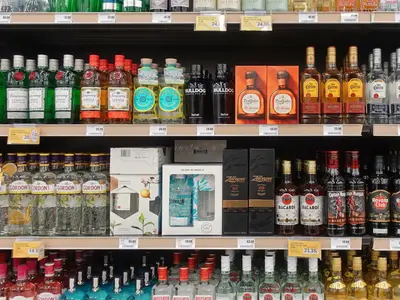
A. Recently, we released another study that showed how PFAS can find its way into beer. In essence, breweries use the same drinking water sources as other nearby consumers, so if the local water supply contains PFAS, so will the beer. This is one example of how PFAS persist in the environment, and the well water study is another.
We know from a recent market trends mapper on PFAS that most PFAS production is concentrated in the chemical industry, especially across the eastern United States. The primary demand for these “forever chemicals” comes from manufacturers making other chemicals and consumer products. To put the scale in perspective, the United States produces or imports around 2.5 billion pounds of PFAS each year—an astonishing amount—and overall, the annual production reaches about 12.5 trillion pounds. That’s a lot of PFAS circulating in our economy.
This significant level of PFAS production and importation has measurable impacts on environmental quality. Between 2012 and 2021, it was reported that roughly 5 million pounds of PFAS were released into the environment and may potentially expose us to PFAS in our everyday lives.
Q. How can private well users, homeowners, and others take action to protect themselves and their communities?
A. While local health departments can test private well water for other contaminants, PFAS testing is rare, often because of the high cost. People can ask their local health department whether there are known PFAS releases to the environment in their area or whether any testing is available. They can also hire a certified lab to test their water. Our team is working to make that testing more widely available. This study is also informing development of a publicly- available map (coming soon) to show areas where private wells are more likely to have PFAS in water.
There are common filters that do a good job of removing PFAS from water. People can install these at their sink to filter drinking water. Look for filters that are certified to remove PFOA and PFOS. We share information on our website about how to know whether a filter is certified: https://www.cleanwaterforuskids.org/pfas/filters/.
We also remind private well users to regularly test their well water for other contaminants, including bacteria and metals.
Q. News about the many sources of PFAS exposure can be alarming. This is a potential health risk that appears difficult to avoid. Can you tell us about any positive developments you have seen through this study and others?
A. Our well water study was designed to be helpful and empowering. We used a participatory science model – well owners collected water samples themselves and answered a detailed survey about their water use. When we informed people of high PFAS levels and recommended they take action, 49% installed water filters. We also saw participants gain confidence in their water through the testing.
We are happy to see that our risk communication efforts had a positive effect, and learned lessons that will apply to our ongoing work protecting people from contaminants of concern.
Read the full paper here:
Wood E, Mulhern RE, Gibson JM, Reich BJ, McWilliams A, Liyanapatirana C, Hoffman K, Kondash AJ, Hoponick Redmon J. PFAS in Rural U.S. Well Water: Using Participatory Science to Identify and Communicate Results to Address Risks. Environmental Science & Technology. 2025; doi:10.1021/acs.est.5c02521