Turning the Tide on Harmful Algal Blooms: The Need for Custom State-Level HAB Models

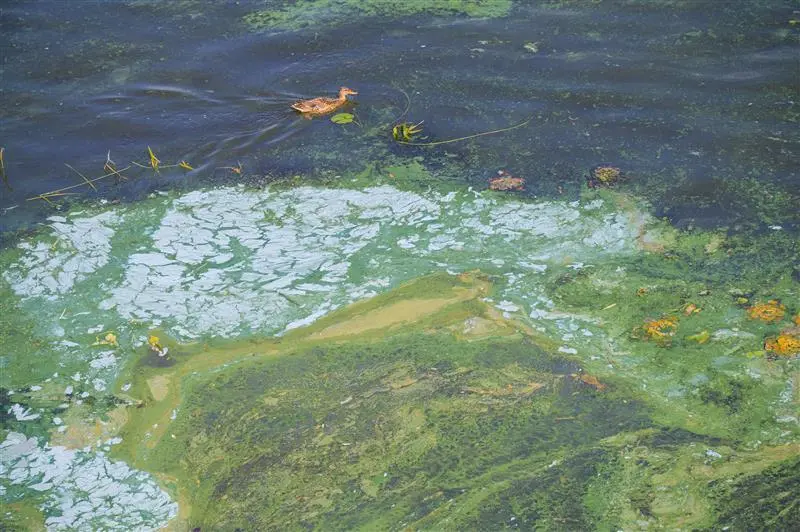
When a bright green film spreads across a familiar lake or reservoir, it's more than an eyesore. It's a far more serious threat to public health and a signal of an environmental challenge. Harmful algal blooms are becoming more frequent and severe as water temperatures rise, and nutrient levels increase. They can lead to contaminated drinking water, threaten fish populations, and disrupt local economies built around recreation and tourism. From a public health perspective, harmful algal blooms can pose serious risks to people who come into contact with the impacted water, causing skin irritation, respiratory issues, or more serious illness if the toxins are ingested.
The U.S. Environmental Protection Agency (EPA) provides national harmful algal blooms (HAB) forecasts that serve as valuable early indicators of risk. But what if we could deliver HAB forecasts at a more granular level for greater precision, timeliness, and local relevance needed to guide on-the-ground decisions?
Whether you are looking for a model for a single lake or system of lakes, the time is right to move beyond broad national forecasts and invest in custom HAB models that support more proactive, efficient, and informed water management.
The EPA’s HAB forecasts provide an important national snapshot of bloom conditions. They rely on satellite data and standardized models to estimate the likelihood of harmful algal bloom formation and movement across large regions. For awareness and broad-scale planning, these tools are incredibly valuable.
However, the data may not reflect the specific conditions that drive harmful algal blooms locally, such as the timing and amount of rainfall, lake bathymetry, or wind patterns that concentrate blooms in certain coves or shorelines.
For state and local teams responsible for protecting water quality and public health, this can pose real challenges. Staff may need to send field teams for sampling without clear prioritization. Risk communication to the public may lag real-tome conditions and mitigation actions from aeration to treatment may come after a bloom has already spread.
Custom HAB forecasting brings the focus closer to home. By combining satellite imagery, in-water sensor data, and localized environmental variables, state and local water authorities can build tailored predictive models for harmful algal blooms that better reflect their unique hydrologic and ecological systems. This significantly improves their ability to anticipate and manage bloom events rather than merely responding to them.
Measurable benefits of custom predictive modeling for harmful algal blooms include:
Developing a localized HAB forecasting program doesn’t require starting from scratch. Many states already collect water quality data, manage in situ sensors, and use GIS tools that can serve as the model’s foundation.
In our partnership with Florida Department of Environmental Protection (DEP), we were able to create a model that ran each day instead of once each week, ensuring data were as up to date as possible. This allowed the team to be more predictive and proactive in their field-testing approaches.
To save time and distribute resources effectively, we split larger lakes into smaller zones, so that managers could identify a more specific area to prioritize when allocating sampling teams. For lakes with zones, we could be specific about prioritizing sampling in areas that are near public beaches or drinking water intakes. We were also able to model the movement of a bloom from one area of the lake to another.
The model developed for Florida also predicted a continuous variable representing harmful algal blooms conditions rather than a binary bloom or no bloom condition like the national EPA model. This allowed water managers to tailor the model to their specific system.
John Park will be presenting on Operational Forecasting of Harmful Algal Blooms in Florida Lakes Using a Two-Stage Bayesian Model at the American Geophysical Union's (AGU) 2025 Annual Meeting on December 17th. Learn more here.
As weather patterns continue to shift and intensify, and harmful algal blooms become more frequent, the cost of reactive response grows. Investing in localized forecasting allows states to shift from crisis response to proactive management, protecting public health, conserving resources, and strengthening resilience.
National HAB forecasts will always play a role in understanding the broader picture. But the greatest impact comes when states take that foundation and make it their own. By tailoring HAB forecasts to local conditions, state agencies can protect their water more effectively and ensure communities have the clean, safe water they depend on.
Are you a water manager interested in building your own HAB forecasting capabilities? The first step starts with a brief conversation! Together, we can discuss your system, management goals, and data readily available. Contact our team to get started on the development of your own pilot forecasting model.