Insights



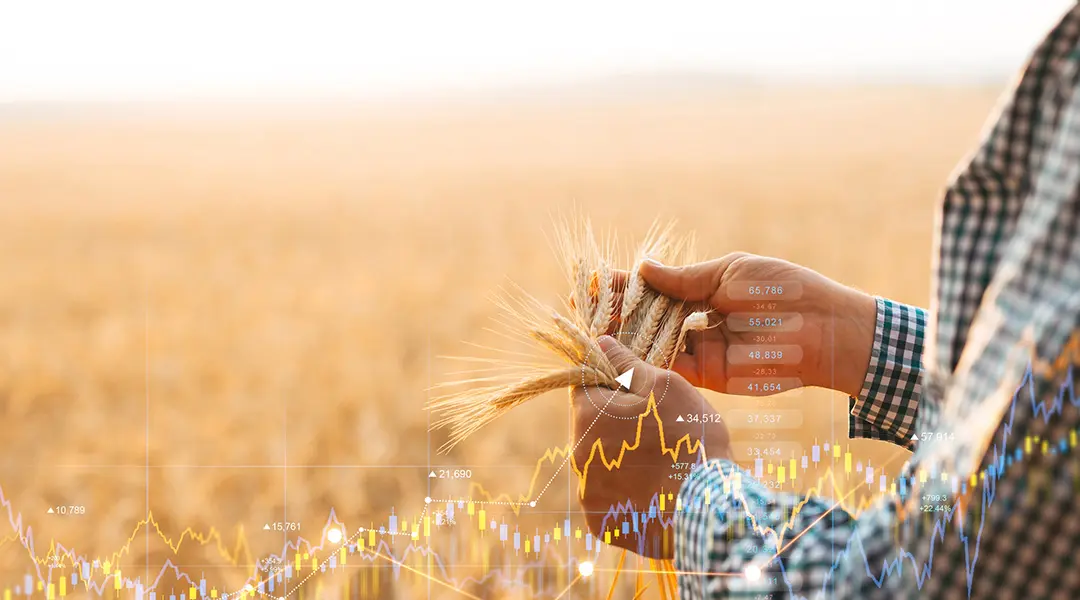
Headlines from across North America highlight farmers struggling to remain profitable amid rising input costs and uncertain global trade dynamics. For nearly every major crop, prices have fallen below production costs, forcing U.S. farmers to make the tough choice to “hang on or get out” amid the most challenging farm economy since the 1980s. Harsh financial conditions have long been the norm for farmers in developing countries, the majority of whom farm on fewer than 5 acres. These “smallholder farmers” often work within informal markets with few financing options at their disposal, limiting their adoption of new technologies and, in turn, their productivity and profitability.
In today’s farm economy, even highly productive farmers are struggling to maintain yields and profits, necessitating new solutions. It may seem that sustainability should be a lower priority, but we offer a different perspective: strengthening integrated sustainable supply chains—from farmers to food companies—is critical to ensuring that farmers thrive, not merely survive.
Shared Risk, Shared Reward: Emerging Sustainable Supply Chain Models
There are reasons to be cautiously optimistic about the role sustainability can play in transforming farm economies and food systems. Farm viability is emerging as a weak link in the food system due to variable weather, rising input and operating costs, and volatile pricing. Sustainable agricultural practices can reduce these risks by improving soil health and diversifying farm income, but these solutions cost money and require data-based planning. Unfortunately, the farmers who can afford to take a long-term view and make these investments are increasingly few and far between.
However, the emergence of new partnership models and risk-sharing arrangements across agricultural supply chains means that farmers no longer have to traverse these risky, costly steps alone. Momentum for novel risk-sharing partnerships spanning farmers, processors, service providers, markets (e.g., carbon), and government is growing. Examples from organizations operating in the United States and globally include the following:
Supply Chain Partnerships
Increasingly, farmers can tap into carbon markets to help pay for sustainable agriculture investments. For example, AgSpire helps U.S. farmers and ranchers identify regenerative agriculture practices that are a win-win for farmer profitability and sustainability. Then, they facilitate enrollment in programs that help farmers cover investment costs.
Risk-Sharing Across Supply Chains
To meet its goal of shifting 7 million acres of farmland to regenerative practices by 2030, PepsiCo shares resources with farmer–suppliers to help them make changes that benefit their soil and their bottom line. ADM also ambitiously invests in farmers wanting to improve their sustainability, with the goal of 5 million acres under regenerative practices by 2025.
Market Development Partnerships
In higher-risk markets, RTI International leverages public, private, and philanthropic funding to build sustainable, regenerative supply chains for agriculture, food, and beverage companies, like PepsiCo and Starbucks. RTI’s focus on smallholder farmers in low- and middle-income countries helps bridge the gap, enabling them to join sustainable supply chains.
More work is needed to refine and scale these models, but their emergence represents a promising first step.
When Farms Struggle, the Food System Follows
The cost of inaction is great. Although many farmers have been hanging on, hoping that external factors will soon improve, farm bankruptcies and financial uncertainty continue to rise.
A shrinking farm base often leads to consolidation, with more land concentrated among large farms that studies show are more likely to favor monoculture and less-sustainable practices, posing another risk to sustainable supply chains. Additionally, large, vertically integrated farms often become price-makers versus price-takers, further isolating independent farmers and processors. When local sourcing is no longer viable, supply chains become longer, potentially leading to increased environmental impacts and waste and lost economic benefits within rural communities.
Sustainable supply chains present a path forward, but farmers alone should not travel this path. Now, more than ever, we need the rest of the supply chain, including food retailers, manufacturers, processors, and technical assistance providers, to step into roles that absorb risks that farmers can no longer bear on their own.
It is heartening to see large food and agriculture companies meeting the moment with an increasing flurry of regenerative and sustainable agriculture commitments. Building a sustainable supply chain depends on their continued innovation coupled with farmer-inspired solutions, bold leadership, and a shared responsibility for our food system, including the financial viability of the farming businesses that underpin it.
Join the Conversation at Trellis GreenBiz 26
Don’t miss RTI’s breakout session at GreenBiz on February 18, as we further explore these topics alongside experts from ADM, AgSpire, and PepsiCo, as well as a U.S. farmer. Stay tuned for insights from the session to see how sustainability can be part of the solution for maintaining the global agriculture ecosystem.
Sustainable supply chains require the right partners. Let's talk about how RTI can help you get started.
Disclaimer: This piece was written by Amanda L. Rose (Agri-Food Systems Lead) and Tracy Mitchell (Director, Agriculture) to share perspectives on a topic of interest. Expression of opinions within are those of the author or authors.