Insights


Key Takeaways
Inhaled therapeutics may help address antimicrobial resistance (AMR) by delivering medicines directly to the lungs, potentially improving treatment effectiveness for respiratory infections while reducing unnecessary systemic exposure.
Pulmonary drug delivery is gaining momentum across antibiotics, vaccines, biologics, and other therapies, driven by advances in particle engineering, aerosol science, and inhaler technologies.
Successful inhaled therapeutic development requires specialized expertise in formulation design, aerosol characterization, device selection, and manufacturing to ensure medicines reach the intended region of the lung.
Looking Beyond New Antibiotics in the Fight Against AMR
Antimicrobial resistance (AMR) is one of the most pressing public health challenges of our time. It occurs when bacteria and other microorganisms evolve over time and no longer respond to medicines, making infections harder to treat and increasing the risk of severe illness and death.
The scale of the challenge is significant. According to a 2024 global analysis published in The Lancet, bacterial antimicrobial resistance was associated with an estimated 4.71 million deaths worldwide in 2021, including 1.14 million deaths directly attributable to AMR.
The search for new antibiotics remains essential. But as the global health community works to replenish a shrinking arsenal of effective treatments, another important question is gaining attention: Are we delivering existing therapies in the most effective way possible?
Traditionally, many therapies used to treat lung infections are administered orally or intravenously, requiring the medicine to travel throughout the body before reaching the lungs. While these approaches remain necessary in many situations, researchers and drug developers are increasingly exploring whether targeted pulmonary delivery could offer advantages for certain respiratory infections while helping combat AMR.
Developing Inhaled Therapeutics: From Concept to Product
When discussing antimicrobial resistance, conversations often focus on discovering new medicines. Equally important, however, is ensuring that medicines reach the site of infection as effectively as possible.
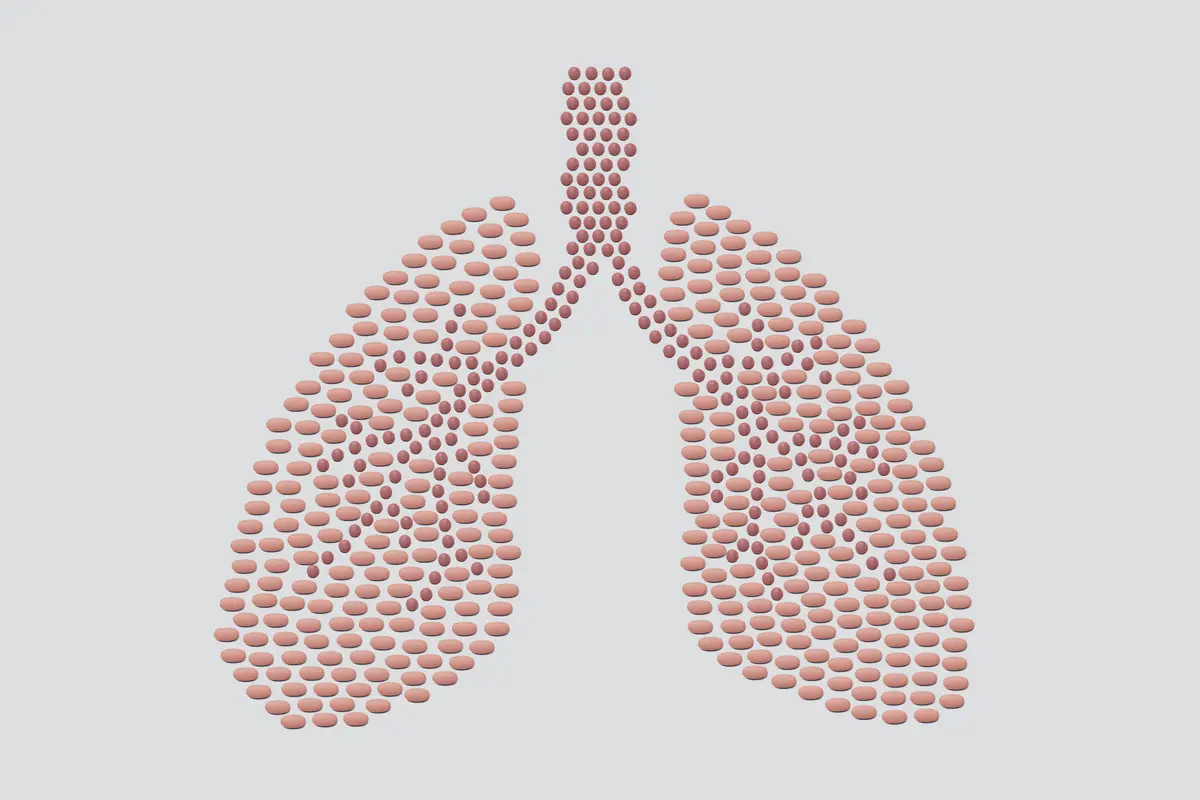
For infections located primarily in the lungs, inhaled delivery offers a fundamentally different approach than traditional oral antibiotics. Rather than distributing medicine throughout the body, inhaled therapies are designed to deliver drug particles directly into the respiratory tract.
The concept is simple: put the medicine where it is needed most.
For developers, this creates an opportunity to deliver meaningful drug concentrations in the lungs while potentially reducing the total amount of drug required compared with some systemic approaches. Researchers are also exploring how targeted delivery strategies may reduce unnecessary exposure outside the lungs, an area of increasing interest as scientists seek new ways to preserve the effectiveness of existing antimicrobial therapies.
The opportunity is particularly relevant because lower respiratory infections represent one of the areas most impacted by antimicrobial resistance. An analysis of Global Burden of Disease 2021 data found that drug-resistant bacteria accounted for nearly half of lower respiratory infection deaths, underscoring the importance of respiratory infections in the global AMR burden.
While inhaled therapeutics may not be appropriate for every disease or every patient, they represent an evolution in how we think about treating respiratory infections.
A New Era for Pulmonary Drug Development
The promise of inhaled therapeutics extends beyond antibiotics.
Researchers are investigating pulmonary delivery across a growing range of applications, including anti-infectives, vaccines, biologics, and other therapies that could benefit from direct delivery to the lungs.
Several factors are driving this momentum:
- Growing concern about antimicrobial resistance and treatment effectiveness.
- Advances in particle engineering and formulation science.
- Improved understanding of aerosol behavior and respiratory deposition.
- Continued innovation in inhaler and drug-delivery technologies.
Together, these developments are expanding what may be possible through pulmonary drug delivery and creating new opportunities for pharmaceutical innovators.
However, transforming a promising concept into a viable inhaled product remains a highly specialized scientific challenge.
Turning Scientific Promise into Practical Solutions
Developing an inhaled therapeutic requires much more than selecting an active pharmaceutical ingredient. Success depends on a complex interaction of formulation design, aerosol performance, particle characteristics, device selection, and manufacturing considerations.
Small changes can have significant impacts on how a therapy performs.
- Can particles reach the intended region of the lung?
- Will the formulation remain stable over time?
- Can the process be scaled successfully for future development?
Answering these questions early is critical for organizations seeking to make informed investment and development decisions.
At RTI, our scientists work with organizations developing inhaled medicines to generate the data needed to support informed decision-making during early-stage development. By evaluating aerosol performance, formulation characteristics, and development feasibility during early-stage research, innovators can better understand a candidate's potential and identify challenges before advancing into more resource-intensive phases of development.
The Future of AMR May Depend on More Than New Medicines
Recognizing the growing threat, countries participating in the 2024 United Nations High-Level Meeting on AMR agreed to the first global target for reducing deaths associated with bacterial antimicrobial resistance: a 10% reduction by 2030 compared with 2019 levels. Achieving that goal will require advances not only in drug discovery, but also in prevention, stewardship, diagnostics, and delivery technologies.
Inhaled therapeutics represent one promising example of that shift. The path forward will require continued scientific rigor, collaboration, and innovation. As interest in pulmonary drug delivery grows, inhaled therapeutics may prove that some of the most transformative breakthroughs come not from discovering a new medicine, but from delivering it differently.
Bridge the gap between theoretical potential and credible feasibility data.
Contact us to start a conversation.
Disclaimer: This piece was written by Sara Maloney (Research Chemist) to share perspectives on a topic of interest. Expression of opinions within are those of the author or authors.