Insights



Key Takeaways
Mass gatherings increase disease transmission risk. Large international events like the World Cup create dense interactions that can accelerate the spread of infectious diseases.
Preparation and early detection are critical. Surveillance systems, modeling tools, and scenario planning help identify and contain outbreaks before they escalate.
Post-event evaluation strengthens future response. Assessing outcomes and costs helps improve health systems and preparedness for future global events.
The countdown to the 2026 FIFA World Cup is on.
Every four years, the World Cup brings together players, fans, and revelers from around the world to cheer on their teams and enjoy the unique excitement that comes with international sporting events. While occasions like these can be an economic boon for local businesses in host cities—not to mention a fun experience for attendees—they also bring with them several unique health and security challenges. This year, with games planned in 16 different cities across three countries, the World Cup’s public health considerations are complex, varied, and multifaceted.
In addition to the health challenges we can anticipate with large events—things like increased numbers of accidents, overdoses, and trauma/injury—health officials will be concerned about the amplified potential for infectious disease spread. With so many people from so many different countries convening in concentrated areas for a brief period of time, human interactions become more compact, increasing the risk that diseases could spread more rapidly or have more detrimental outcomes.
I’ve been conducting research and managing programs related to infectious disease and global health security for more than 20 years, working to improve health systems and disease surveillance in more than 20 countries, including the U.S. If I close my eyes and imagine I’m suddenly in the shoes of a public health official in one of this year’s World Cup host cities, here’s what I’d be thinking about before, during, and after the events.
The Warm-Up: Preparing Health Systems for Global Events
In the lead-up to the World Cup games, health officials are likely examining their existing health systems in the host city as well as the surrounding areas. They’re asking themselves questions like: Are we prepared for an unexpected outbreak? How will we detect a communicable illness, act quickly to treat it, and contain any spread? Do we have the staff, the testing laboratories, and the medical personnel and facilities to deal with a contagious illness?
Assessing Outbreak Preparedness through Scenario Planning
Every country and every city will have a different baseline for its own health system and outbreak preparedness. Many will have already gathered the relevant officials and experts to run through a variety of scenarios that test how prepared their systems are, and where any gaps may be. Through this tabletop exercise, health officials guide partners through a step-by-step mock outbreak scenario to test coordination, communication, and decision-making—much like the preparedness drills firefighters and other emergency responders conduct to stay ready for real-world crises.
My colleagues recently led just such an exercise as part of the Centers for Research in Emerging Infectious Diseases (CREID) network, working with a team of over 100 infectious disease researchers from 32 countries to help them think through scenarios and plan for the unknown.
Using Disease Modeling to Predict and Prevent Outbreaks
Disease modeling is another critical tool that helps health officials prepare for potential outbreaks. Some incredibly innovative tools exist to help health leaders plan budgets and resources accordingly for more efficient and effective preparedness and response.
As one example, RTI’s disease modeling and geospatial experts have teamed up to develop predictive models that can help anticipate the outcomes of potential outbreaks. The system uses a synthetic population dataset that provides a detailed, "digital twin" of communities to strengthen the precision of disease modeling.
Based on that information, health officials will work to shore up additional surge capacity at local hospitals and health centers, as well as potential “swing” capacity at labs that can speed up testing if it’s needed.
The Main Event: Rapid Detection and Surveillance to Prevent Outbreaks
The days just leading up to and during the event are where the considerations above can mean the difference between a small, contained illness and a potential outbreak.
Rapid detection is the key to identifying a medical issue before it has the chance to spread. My infectious disease colleagues and I recently tested such surveillance tactics through the Surveillance of Acute Febrile Illness Aetiologies in Nigeria (SAFIAN) project, during which we screened individuals for fevers, then tested those who had fevers for 25 infectious diseases at the same time.
Through the study, we were able to help local health officials identify which pathogens to focus on due to their higher risk prevalence, while also helping them strengthen their disease early-warning systems to detect and respond to emerging health threats.
The Post-Game: Evaluation Strengthens Future Outbreak Preparedness
When all the games are over, the streets have been cleaned, and the multitudes head home, public health officials still have extensive work ahead of them.
If any sort of infectious disease challenge did unfortunately occur while so many people were in such close proximity, the local health system may still be working overtime to treat patients in local clinics or hospitals, as well as contain any further spread.
And regardless of whether any health incidents occurred, public health officials will undoubtedly be further evaluating their health systems: What did we learn? What did our preparation and/or response cost? What activities were most cost effective?
Such reflection and learning matters; it can even save lives. Through our work responding to disease outbreaks globally—from Ebola in Guinea and the DRC to Lassa fever in Nigeria—RTI’s epidemiologists, disease modelers, microbiologists, and health economists work together to document lessons learned and assess public health systems.
To help aid this process, we developed the Outbreak Costing Tool to help public health officials systematically estimate the costs of investigating and responding to disease outbreaks. This type of information can be critical to being even better prepared for the future.
Public Health Preparedness Keeps the Games Safe
While the World Cup is exciting, public health officials know that effective, efficient disease surveillance is no game. Event-goers should be thoughtful and take steps to keep themselves safe and healthy while in crowded spaces, but they don’t need to let fear hinder their fun. Luckily, the research, tools, and expertise exist to help safeguard populations from outbreaks. We’re proud to work hand-in-hand with health officials and communities in the U.S. and around the world to minimize disease risks and enable happy, healthy lives.
Explore the Latest in Disease Surveillance:
Disease X Modeling Framework Webinar
RTI’s recent webinar explored disease‑agnostic, scalable modeling tools that help public health leaders simulate outbreaks, plan responses, and make faster, data‑driven decisions across emerging threats.
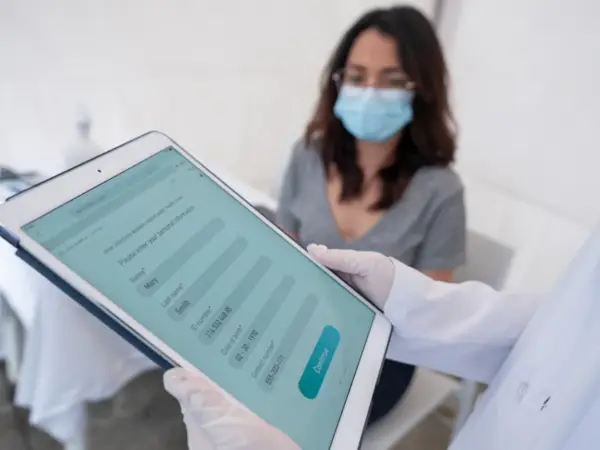
Enhancing Public Health Surveillance with Survey and Electronic Health Record Data Integration
Integrating survey data with electronic health records can modernize public health surveillance, delivering more timely, cost‑effective insights to guide public health decisions.

Centers for Research in Emerging Infectious Diseases (CREID)
RTI leads the CREID Coordinating Center, supporting a global research network to detect emerging pathogens early, strengthen outbreak response, and improve preparedness for future pandemics.

Public Health and Well-Being
RTI advances public health through research, evaluation, and collaboration—designing evidence-based programs that inform policy, promote healthy behaviors, and help communities thrive.
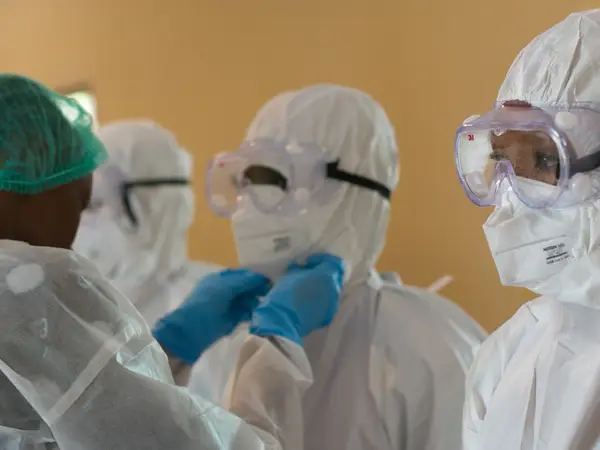
Global Heath
RTI strengthens global health systems by partnering worldwide to tackle infectious diseases, improve maternal and child health, and help countries prepare for emerging health threats.
Disclaimer: This piece was written by Lauren Courtney (Senior Research Epidemiologist) to share perspectives on a topic of interest. Expression of opinions within are those of the author or authors.