RTI Well-Positioned to Support HHS and EPA Microplastics Initiative

Policy momentum is building around microplastics in water. Federal coordination is shaping future regulation and research priorities.
Better data and methods are urgently needed. Standardized detection and risk frameworks remain key gaps.
Organizations should prepare for evolving requirements. Increased research and regulatory focus will impact water systems, monitoring, and public health strategies.
Plastic pollution is a complex, systemwide issue that affects our air, food, and water, spanning from visible macroplastics to particles that are so small they are invisible. As plastics accumulate in landfills and waterways, they break down into smaller fragments—microplastics (<5 mm) and nanoplastics (<1000 nm)—and release plastic additives that enter environmental and human systems. These particles and associated chemicals are now widespread globally, infiltrating air, water, and food and now various parts of the human body (ie. brain, placenta, heart); posing risks to ecosystems and human health.
Recently, microplastics have raised significant concerns and prompted critical research questions into human exposure and health impacts. Addressing these gaps requires a coordinated, large-scale effort to advance science and develop evidence-based solutions.
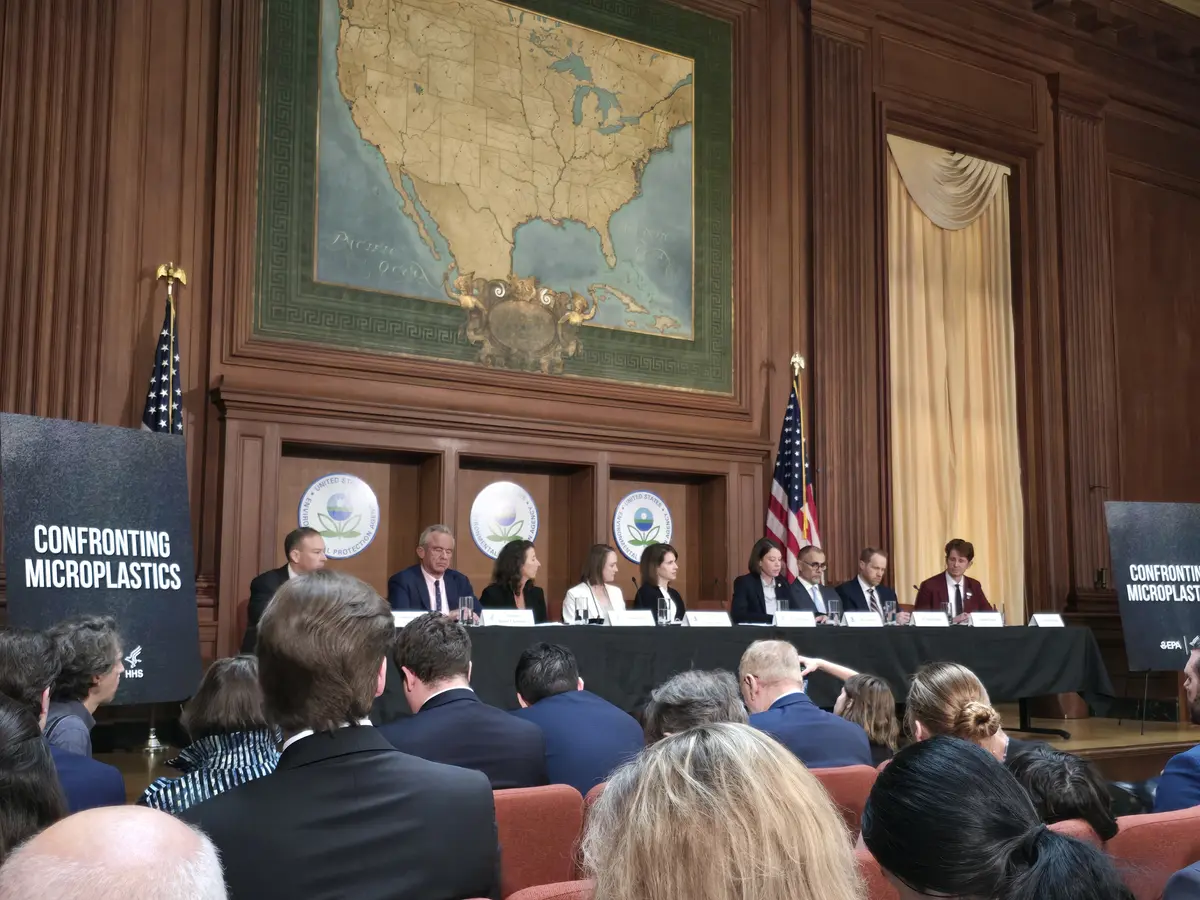
Last week, Environmental Protection Agency (EPA) Administrator Lee Zeldin and Department of Health and Human Services (HHS) Secretary Robert F. Kennedy Jr, announced major federal actions to safeguard the nation’s drinking water against microplastics and combat microplastics in the human body. RTI staff attended the historic event as members of the invited audience.
It was very encouraging to witness this historic moment for the advances of microplastic research and to hear firsthand from the invited expert researchers. The room was filled with a sense of reverence, acknowledging what this could mean for the future of scientific research. – RTI Research Environmental Engineer, Hannah Lohman
The event also coincided with the EPA releasing the Six Contaminant Candidate List (CCL6), which includes 75 chemicals, 4 chemical groups (microplastics, pharmaceuticals, per-and polyfluoroalkyl substances (PFAS) and disinfection byproducts), and 9 microbes as new contaminants of concern. Adding these substances to CCL6 will allow for prioritized funding research and potential future regulation through the Safe Drinking Water Act.
The draft CCL6 highlights the following research gaps for microplastics:
As a scientist focused on understanding the impact of nanoplastics on human health, it was powerful to see this issue elevated to a national priority and to be part of that moment. The growing recognition of this challenge highlights the urgency and opportunity to advance rigorous, human-relevant science. I’m excited to help lead our RTI team in deepening the understanding of micro- and nanoplastics and in translating that knowledge into solutions that drive meaningful, real-world impact. - Leah Johnson, Senior Director of Biomedical Technologies at RTI
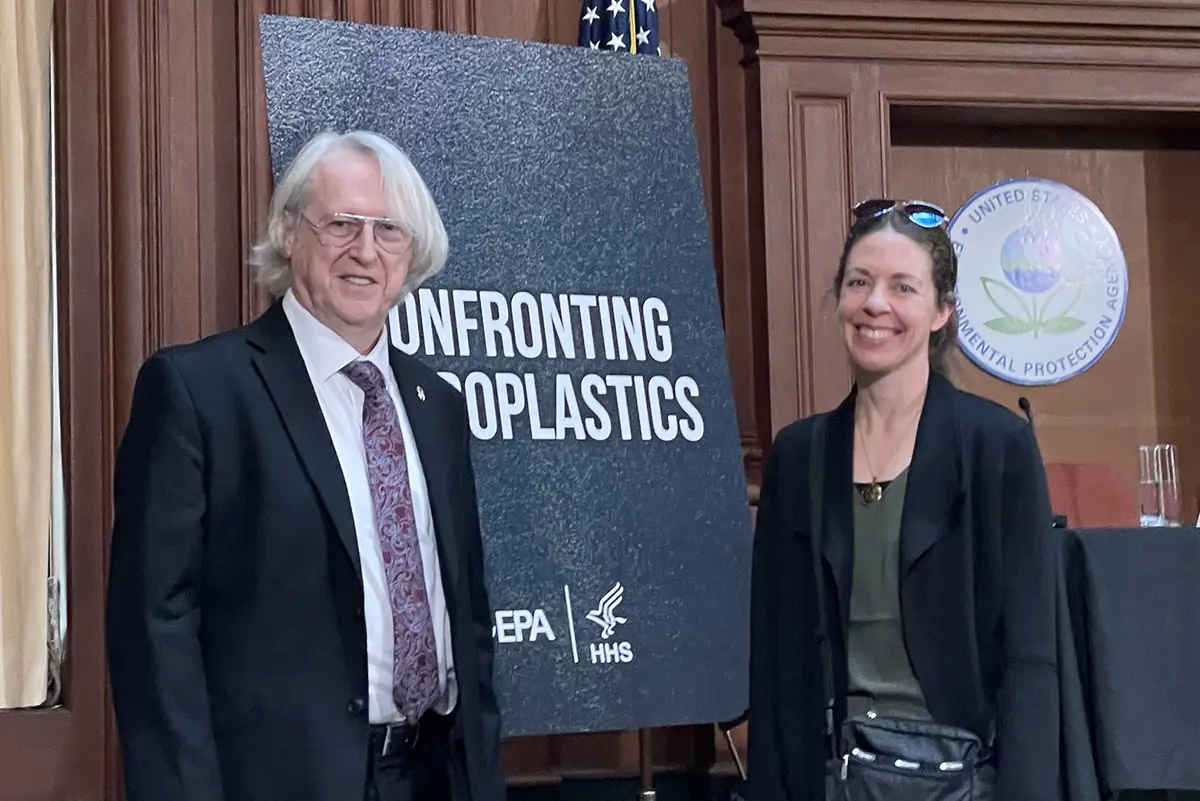
Timothy Fennell and Leah Johnson attending the press conference.
We bring a broad range of expertise in the research and monitoring of contaminants, including microplastics, to help safeguard drinking water quality for communities across the United States. From our work protecting children’s classrooms from lead released through aging drinking water infrastructure to our programs tracking PFAS contamination in wells and municipal systems, RTI has consistently advanced science in support of public health.
Developing standardized protocols will be important for ensuring consistency across laboratories. RTI has been committed to standardizing laboratory testing for decades. We provide laboratory proficiency testing across multiple environmental analytes supporting high analytical standards, and helping laboratories better understand interlaboratory analytical challenges. We see this as a critical opportunity to develop and standardize robust microplastics testing standards.
Additionally, the event highlighted the Advanced Research Projects Agency for Health (ARPA-H), an agency within HHS that announced STOMP: Systematic Targeting Of MicroPlastics. STOMP is a nationwide program to fund $144 million in research to measure and understand the impact of microplastics and find interventions to protect humans from exposure to microplastics.
STOMP is funded in two phases:
Our scientists have the experience and high-resolution instrumentation to isolate, identify, and quantify microplastics and plastic additives within environmental samples, biological samples, and consumer products. RTI holds a large inventory of plastic types, spanning the life cycle of plastic manufacturing from pre-production to manufactured products, to recycled materials. These materials have been converted by RTI’s technical team to plastic particulates, including microplastics and nanoplastics, using a broad range of material processing techniques and top-down and bottom-up fabrication approaches.
We also lead toxicology research in understanding the human health impacts of microplastics, nanoplastics, and plastic additives. Our community-engaged implementation programs also work with local and state governments, utilities, and communities to support testing, communication, and mitigation processes for improved drinking water quality.
Addressing the prevalence of plastics and its adverse effects on human health comes with its challenges. Last year, RTI attended discussions in Geneva on the potential United Nations Plastic Treaty. This event began with the goal of setting a global, legally binding UN treaty that addresses the lifecycle of plastics, including the human health implications of microplastics. Delegates did not reach a consensus, and discussions are expected to continue in the coming year. Ongoing research efforts will contribute to improving understanding of human exposure to microplastics and their possible health impacts. RTI continues to conduct research on plastic pollution and to examine issues related to microplastics in water systems.