Newsroom
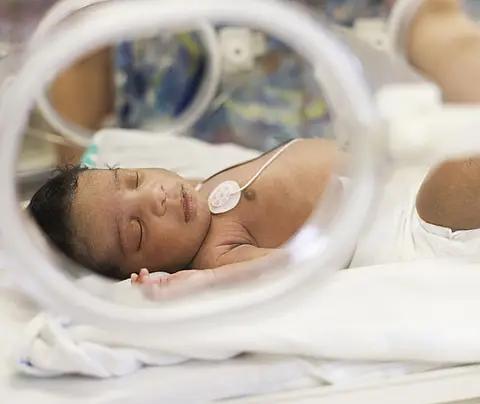
RESEARCH TRIANGLE PARK, N.C. — Experts from RTI International, an independent scientific research institute, have contributed to a national clinical trial for newborn infants with opioid withdrawal. The study found that administering medication based on symptoms, rather than a set schedule, helped infants get ready for hospital discharge sooner.
The study, known as the OPTimize NOW, was led by Dr. Lori Devlin (University of Louisville/Norton Children’s Neonatology) and other clinical investigators. As the Data Coordinating Center (DCC), led by Dr. Abhik Das, Distinguished Fellow in Biostatistics, RTI helped with the study’s design, coordination, data analysis and reporting.
“For newborn infants with neonatal opioid withdrawal syndrome managed using Eat, Sleep, Console, symptom-based dosing represents an effective, evidence-based approach that can shorten the time these babies need to get medically ready for discharge from the hospital,” said Dr. Denise Babineau, a senior research statistician for the trial at RTI and alternate principal investigator for the DCC. “These findings help clarify how medication strategies can be aligned with supportive care models to help babies go home sooner.”
Researchers compared the length of time from birth until medical readiness for discharge among infants born at or after 36 weeks’ gestation who were at risk for pharmacologic treatment for neonatal opioid withdrawal syndrome (NOWS). Infants were treated using either a symptom-based dosing approach or a scheduled opioid taper while being managed with the Eat, Sleep, Console model of care.
On average, infants treated with symptom-based dosing reached medical readiness for discharge two days earlier than those on scheduled opioid taper.
RTI’s Scott McDonald, Margaret Crawford, Lillian Trochinski and Evan Rhodes were also co-authors on the study published in the Journal of the American Medical Association (JAMA).
The study was conducted as part of the Helping to End Addiction Long-Term (HEAL) Initiative’s Evaluation of Limited Pharmacotherapies for Neonatal Opioid Withdrawal Syndrome Trial Consortium, also known as HELP for NOWS. RTI serves as the data coordinating center for the consortium.
The HELP for NOWS Consortium is funded by the Eunice Kennedy Shriver National Institute of Child Health and Human Development through cooperative agreements under the HEAL Initiative.
The trial is part of the NIH Helping to End Addiction Long-term (HEAL) Initiative and was supported by NICHD grants U24HD107621, UG1HD107580, UG1HD107616, UG1HD107627, UG1HD107628, UG1HD107631, UG1HD107649, UG1HD107650, and UG1HD107653.
View the full study
Learn more about RTI’s substance use and addiction research


RTI International is an independent scientific research institute dedicated to improving the human condition. Our vision is to address the world's most critical problems with technical and science-based solutions in pursuit of a better future. Clients rely on us to answer questions that demand an objective and multidisciplinary approach—one that integrates expertise across social, statistical, data, and laboratory sciences, engineering, and other technical disciplines to solve the world’s most challenging problems.
For more information, visit www.rti.org.